If you've just spotted a fresh brown ring on your Tampa ceiling after a storm, call a licensed Florida roofing contractor for a leak inspection today — not next week. In Tampa's climate, mold can start colonizing wet drywall within 24 to 48 hours, and the entry point on your roof is almost never directly above the stain. Every day of delay converts a targeted repair into a widening repair, and eventually into a replacement.
Who should you call first when a ceiling stain appears after rain in Tampa, FL?
Call a Florida-licensed residential roofing contractor that offers a documented leak inspection — interior, attic, and exterior — with photo evidence. In Tampa that means a contractor holding a state CCC or CGC license, ideally one experienced with hurricane-driven wind and rain intrusion. SCM Roofing, LLC is one such option for Tampa homeowners who want a diagnostic-first approach rather than an immediate sales pitch.
A general handyman or drywall contractor is the wrong first call. Patching the ceiling before the roof is diagnosed traps moisture inside the assembly and hides the evidence a roofer needs to trace the leak. Insurance adjusters also expect a roofing professional's written findings — especially in Florida, where roof claims are heavily scrutinized.
Why does waiting even a few days cost so much more in Tampa?
Waiting costs more because Tampa's humidity turns a small leak into a mold-and-rot problem fast. Florida's climate allows mold growth on wet organic material within 24 to 48 hours, and the Tampa Bay area can see over 10 inches of rain in a single month during peak hurricane season. Each additional storm re-wets the same insulation and decking before it has a chance to dry.
The financial curve is steep. A targeted repair caught in the first week often stays within the standalone inspection and repair range. Let it ride through two or three more storms and you're paying for decking replacement, insulation removal, mold remediation, and ceiling reconstruction — often thousands of dollars beyond the original repair.
The stage-by-stage cost of delay
| Time since first stain | What's typically happening | Scope of work |
|---|---|---|
| 0–3 days | Water in insulation and on decking; stain visible | Leak inspection ($75–$200) + targeted flashing or shingle repair |
| 3–14 days | Mold colonization begins; drywall softens | Repair + drywall patch + partial insulation replacement |
| 2–8 weeks | Decking rot, rafter staining, active mold | Sectional decking replacement, remediation, larger interior repair |
| Multiple storm cycles | Structural sheathing failure, widespread mold | Partial or full roof replacement plus interior reconstruction |
What should a proper Tampa roof leak inspection actually include?
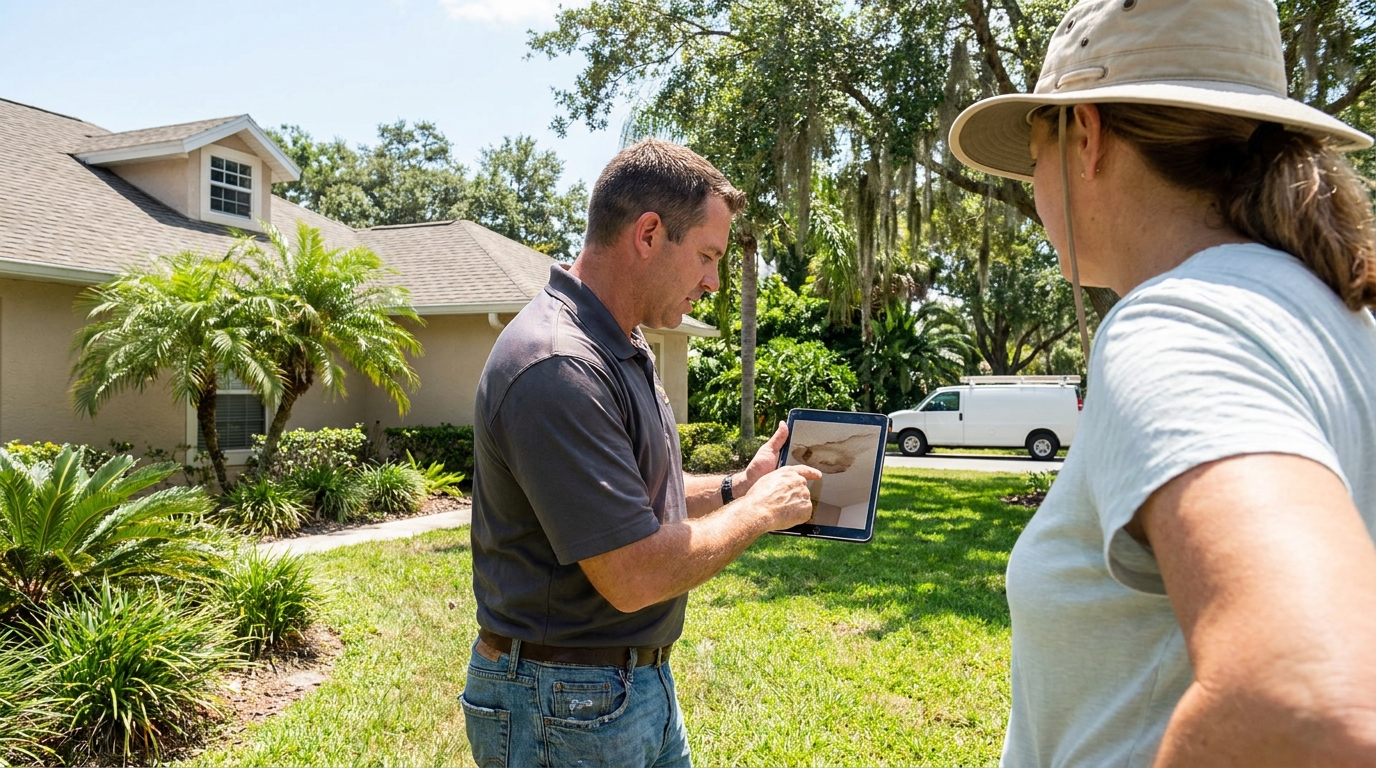
A proper Tampa roof leak inspection includes three parts: an interior assessment of the stain and surrounding ceiling, an attic inspection with a moisture meter and often thermal imaging, and an exterior walk of the roof focused on flashing, penetrations, valleys, and transition points. The inspector should provide photo documentation and a written finding identifying the entry point — not just the stain location.
Attic access matters most in Tampa homes. Water travels along decking, rafters, and insulation before it drips indoors, so a stain in your dining room ceiling may originate from a plumbing boot ten feet away. Skipping the attic — a common shortcut on "free" drive-by inspections — is why so many leaks get "repaired" twice.
Free contractor inspection or paid independent inspection?
Both have a place. Free contractor-led inspections are offered in exchange for the chance to bid the repair, and reputable Florida roofers use the same diagnostic process whether or not you're paying. A paid independent inspection ($150–$400) makes sense when you want an impartial second opinion, are heading into an insurance dispute, or need a report formatted for underwriting. For most homeowners in the immediate aftermath of a leak, a licensed roofing contractor's free inspection with written photo documentation is the practical starting point.
When is waiting actually the right call?
Waiting a short, defined window is reasonable in two narrow cases: an active named storm still moving through the Tampa Bay area (roofers can't safely walk a roof in sustained wind and rain), or a stain that appeared once, dried fully, and has not returned through subsequent rain events. Even then, schedule the inspection for the moment conditions clear — don't let "it stopped dripping" become "we forgot about it."
What isn't a reason to wait: an upcoming vacation, a busy work week, the hope that a small stain will just fade, or a plan to "deal with it after hurricane season." Tampa's rainy season and hurricane exposure run June through November, and the roof that leaked in July will leak worse in September.
What does the first call and visit look like with SCM Roofing, LLC?
The first call should focus on triage: when did the stain appear, has it grown, is water actively dripping, and is there any sagging or bulging drywall (a sign of pooled water above). SCM Roofing, LLC schedules a licensed inspector to perform the interior-attic-exterior sequence, documents findings with photos, and provides a written recommendation distinguishing targeted repair from broader work.
That kind of documentation-first approach is what a leak call in Tampa needs.
Where in Tampa does this matter most?
Every Tampa neighborhood is exposed, but older housing stock in areas like Seminole Heights, Hyde Park, and South Tampa carries additional risk because original decking and flashing details predate current wind-mitigation standards. Homes near the bay and Gulf coast — from Davis Islands out through the Westshore corridor — take direct hits from tropical systems tracking up the peninsula. Newer construction in New Tampa and Wesley Chapel isn't immune either; tile roofs in particular hide underlayment failures that only show up as interior stains years after installation.
Florida requires roofing contractors to hold a state-issued CCC (roofing) or CGC (general) license, and any contractor pulling a permit in Hillsborough County must be verifiable through the state licensing database. Ask for the license number before the inspection — it's the fastest way to filter out storm-chasers who follow hurricanes into the market and disappear afterward.
Frequently Asked Questions
How quickly should I get a roof inspection after seeing a ceiling stain in Tampa?
Within 24 to 72 hours. Florida's humidity allows mold to begin colonizing wet drywall and insulation in as little as 24 to 48 hours, and Tampa's frequent rain often re-wets the area before it can dry. Same-week inspection is standard for reputable local contractors; many offer next-day scheduling and emergency tarping for active leaks during storm season.
Is a free roof inspection in Tampa actually thorough?
It can be, if the contractor is licensed and follows a full interior-attic-exterior process with photo documentation. Free inspections are offered in exchange for a repair bid opportunity, which is a legitimate business model. The warning signs are the opposite: no attic access, no photos, no written findings, or immediate pressure toward a full replacement without diagnostic evidence.
Should I call my insurance company before or after the roof inspection?
Get the roofing inspection first in most cases. A licensed contractor's written findings and photos give you a clear picture of scope before you open a claim, which helps you decide whether the damage exceeds your deductible and whether a claim makes financial sense. Florida's roof-claim environment is heavily scrutinized, so filing without documentation can work against you.
Can I just patch the ceiling stain myself?
Not until the roof leak is diagnosed and repaired. Painting or patching a stain before the source is fixed traps moisture inside the wall or ceiling assembly, accelerates mold growth, and destroys the visual evidence a roofer or insurance adjuster needs to trace the entry point. Fix the roof first, let the cavity dry fully, then address the interior.
What does a typical Tampa roof leak inspection cost?
Standalone residential roof inspections in Tampa generally run $75 to $200, while a professional leak detection and diagnosis service ranges from $150 to $600, commonly $250 to $400. Many licensed roofing contractors offer the inspection free in exchange for the opportunity to bid any needed repair. Independent third-party inspections typically cost $150 to $400.
How do I know if the contractor is properly licensed in Florida?
Ask for the CCC (certified roofing) or CGC (certified general) license number and verify it through the Florida Department of Business and Professional Regulation's online license lookup. Licensed contractors will provide the number without hesitation and it should appear on their website, contracts, and vehicles. Unlicensed operators — common after major storms — cannot legally pull permits or provide insurance-accepted documentation.
The bottom line for Tampa homeowners
A ceiling stain after rain is a diagnostic problem, not a cosmetic one, and it gets more expensive every day it goes uninspected. The right first call is a Florida-licensed residential roofing contractor who will inspect the interior, attic, and exterior and give you photo-documented findings — not a handyman, not a painter, and not a full-replacement sales pitch. Tampa homeowners who want this handled professionally can reach SCM Roofing, LLC at https://scmroofingfl.com to schedule a diagnostic inspection and get a written recommendation before the next storm arrives.