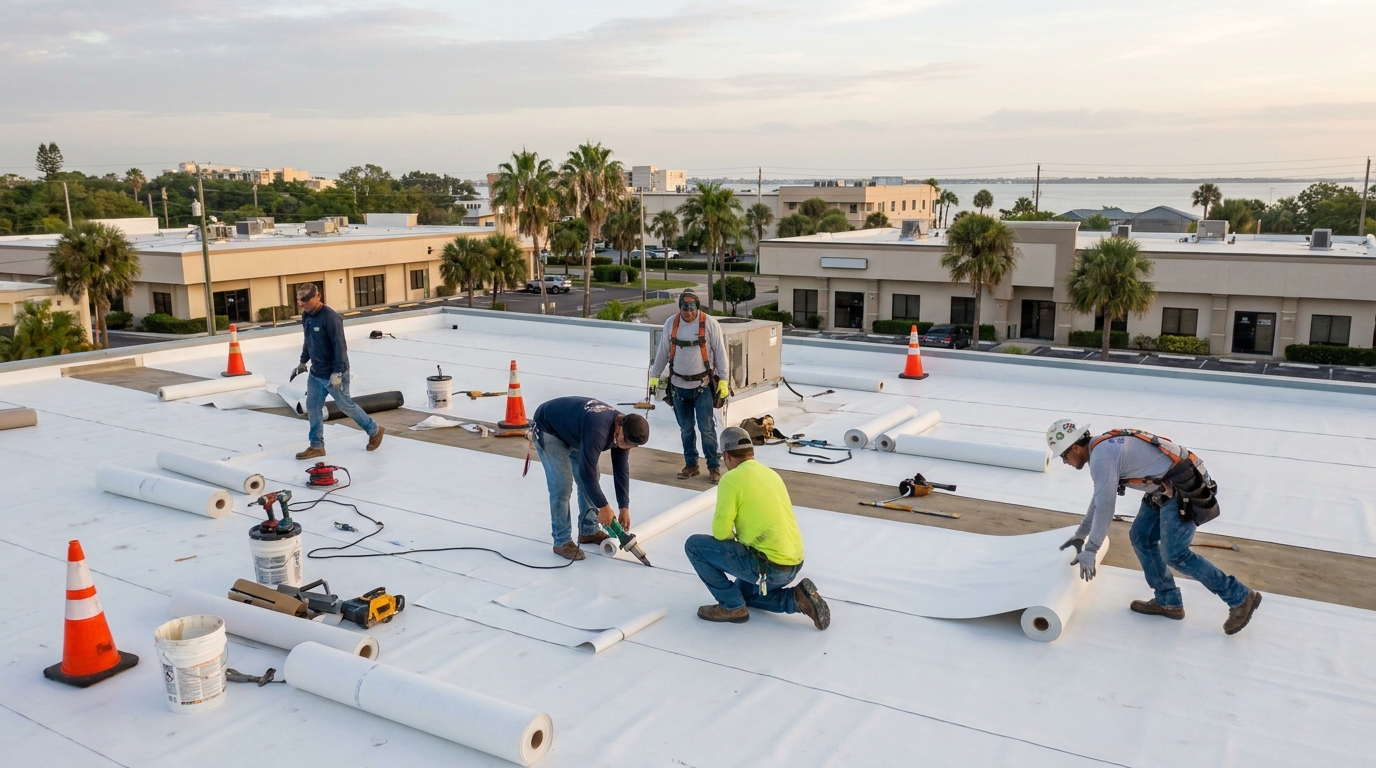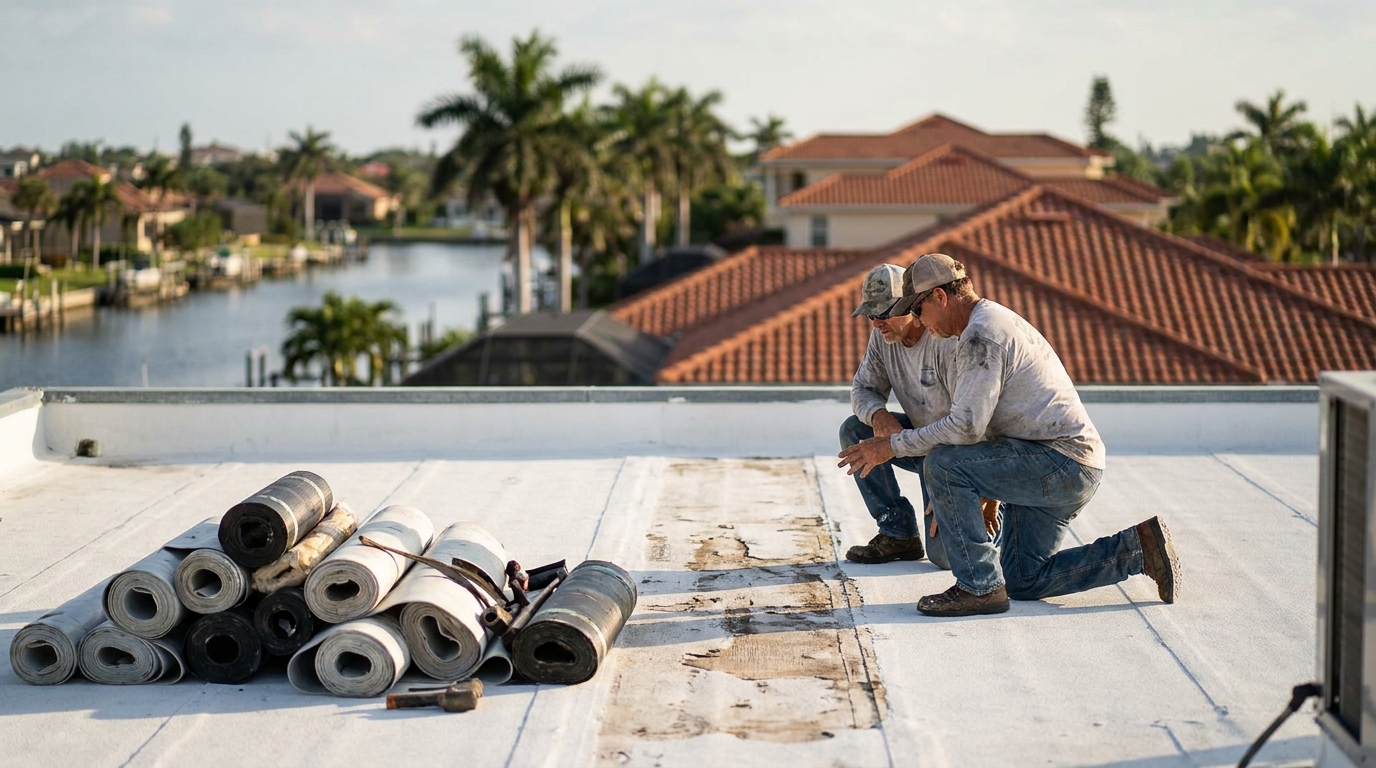
If you own a commercial building in SAN MARCO of Venice, the question eventually arrives: do you coat the existing roof, or replace it outright? It's rarely an obvious call. A coating can extend roof life for a fraction of the cost, but only on a roof that's still fundamentally sound. A full replacement solves underlying problems and resets the clock, but the price tag and disruption are substantial.
SAN MARCO of Venice sits in a stretch of the city where low-slope commercial and mixed-use buildings are common, many of them carrying single-ply or modified bitumen systems that have weathered years of Gulf Coast sun, salt air, and hurricane seasons. The right answer depends on what's actually happening under your membrane — and on how long you plan to own the building.
Here's how we at SCM Roofing, LLC think about the decision, with the numbers and tradeoffs that matter for commercial properties in Venice.
Roof Coating vs Replacement for Commercial Buildings in Venice: The Short Answer
A commercial roof coating runs roughly $1.50–$5.00 per square foot installed in the Sarasota–Venice market and adds 5–10+ years of service per application. A full commercial roof replacement runs $6–$15 per square foot installed and delivers 20–30+ years of service life.
Coating wins on upfront cost and disruption. Replacement wins on lifespan, warranty breadth, code compliance, and the ability to fix anything that's gone wrong beneath the surface. Which one is right for your SAN MARCO of Venice property depends almost entirely on the current condition of your roof and how long you plan to hold the building.
Upfront Cost: Where Coatings Have a Clear Edge
On a per-square-foot basis, coatings are typically 50–75% less expensive than full replacement. For a 20,000-square-foot commercial roof in SAN MARCO of Venice, that's a meaningful spread.
The chemistry you choose drives the number:
- Acrylic: Material cost roughly $0.65–$1.75/sq ft. Lowest cost, strong UV resistance, less tolerant of ponding water.
- Silicone: Material cost roughly $1.50–$2.50/sq ft. Excellent ponding-water performance — valuable for low-slope roofs that don't drain perfectly.
- Polyurethane: Material cost roughly $2.00–$5.00/sq ft. Tougher physical durability where foot traffic is a concern.
- Asphalt-based: Often used as a maintenance coat on existing asphaltic systems.
Replacement pricing in the $6–$15/sq ft range depends on membrane type (TPO, PVC, EPDM, modified bitumen, BUR, or metal), insulation specs, tear-off requirements, and building complexity. Metal roofing for commercial buildings sits toward the upper end of that cost range but brings the longest service life and strong wind-uplift performance — relevant in coastal Southwest Florida.
Service Life and the True Long-Term Math
A coating delivers 5–10+ years per application, and with disciplined recoat cycles you can stretch the system to 10–20 years. A new commercial roof system delivers 20–30+ years with proper maintenance.
That's where the long-term math gets interesting. If you're going to recoat twice over 20 years, the cumulative coating spend can narrow the gap with replacement — sometimes meaningfully. For a buyer with a 5-to-10-year ownership horizon, coatings almost always pencil out. For a long-term owner planning to hold the property 20+ years, replacement often wins on lifecycle cost even though the upfront check is bigger.
Commercial Roof Warranty: What to Know Before You Sign
Warranty terms differ in ways that matter.
Coating warranties are typically 10–20 years and are thickness-dependent. A general industry pattern:
- ~20 mils dry film thickness → 10-year warranty
- ~25 mils → 15-year warranty
- ~30 mils → 20-year warranty
These warranties usually require maintenance and recoat intervals to stay valid. Skip a scheduled recoat and you can lose coverage.
Replacement system warranties typically run 15–20+ years, and single-source warranties are available (CentiMark, for example, offers a 20-year Single Source Warranty). System warranties tend to be broader — covering both materials and workmanship under one document — and they don't hinge on recoat cycles.
For Venice property owners, the warranty conversation should also include what the document says about ponding water. Some silicone coatings do not exclude ponding water, which is genuinely useful for the slightly settled low-slope roofs common on older SAN MARCO of Venice commercial buildings.
Florida Building Code and Hurricane Considerations
This is where Venice's location reshapes the decision. New replacement systems are designed and installed to current Florida Building Code wind-uplift and fastening requirements — the standards written specifically for hurricane-prone coastal counties. A coating applied over an existing system does not upgrade the underlying structure's wind-uplift rating.
If your SAN MARCO of Venice roof was installed under an older code cycle and your insurer or lender is pushing for current code compliance, replacement may be the only path that gets you there. The IBC's re-roofing provisions can apply to coating work as well, and a licensed local contractor should confirm specifics for your building before any work begins.
Pre-hurricane-season timing also matters. Coating cure times and tear-off schedules both work better in the drier stretch before summer storms ramp up, and most SAN MARCO of Venice owners we talk to prefer to have major work wrapped before June.
Energy Performance in Venice's High-UV Climate
Reflective coatings deliver real value here. White silicone and acrylic systems can cut cooling energy use by 10–30%, and ENERGY STAR low-slope qualification requires an initial solar reflectance of at least 0.65. In SAN MARCO of Venice, where buildings absorb intense sun year-round and HVAC runs hard from spring through fall, those savings show up on the utility bill.
Replacement can match or exceed coating energy performance because you can simultaneously upgrade insulation R-value — something a coating physically cannot do. If your existing insulation is thin or wet, replacement is the only way to fix the thermal envelope.
When Coating Is the Right Call
A coating makes sense when:
- The existing roof is structurally sound, dry, and not at end of life
- You want minimal business disruption — no tear-off, no debris, normal operations during installation
- Your ownership horizon is 3–10 years
- Cash flow favors a maintenance-expense treatment over a capital improvement (confirm with your CPA)
- Infrared scanning or core samples confirm dry insulation and a sound deck
When Replacement Is the Right Call
Replacement is the answer when:
- You have widespread leaks, saturated insulation, or deck deterioration
- The roof is at or beyond its service life
- You need current Florida Building Code wind-uplift compliance
- You're planning to hold the building 20+ years
- Mechanical upgrades, drainage corrections, or insulation improvements are on the agenda
A coating applied over a failing roof simply paints the problem. The leaks come back, the insulation stays wet, and the warranty often won't protect you because the substrate was never qualified.
FAQs
Can a coating fix an active leak on my Venice commercial roof?
Not reliably. Coatings require a dry, structurally sound substrate. Active leaks usually point to issues a coating can't address at the source. A professional inspection — including core samples or infrared scanning — should confirm conditions before any coating decision.
How much does metal roofing for commercial buildings cost?
Metal systems fall within the broader commercial replacement range of $6–$15 per square foot installed, typically toward the upper end depending on profile, gauge, coating, and fastening. They bring long service life and strong wind-uplift performance — relevant for Venice's hurricane exposure.
What dry film thickness should I specify for a coating?
A minimum of about 20 mils is generally required for waterproofing-grade coatings, with 20–40 mils typical. Thicker applications generally unlock longer warranty terms.
Which coating chemistry is best for SAN MARCO of Venice?
Silicone is often preferred for ponding-water resistance on low-slope roofs, while acrylic excels on UV and cost. The right choice depends on slope, drainage, and roof traffic — which is why we recommend a building-specific assessment rather than a default answer.
The Bottom Line for SAN MARCO of Venice Owners
The coating-vs-replacement decision isn't ideological — it's diagnostic. A roof that's mid-life and structurally sound is a strong coating candidate. A roof with wet insulation, chronic leaks, or expiring service life needs replacement, full stop. Skipping that diagnostic step is how owners end up paying for a coating now and a replacement two years later.
Commercial property owners in SAN MARCO of Venice who want a straight assessment of which path fits their building can reach SCM Roofing, LLC at https://scmroofingfl.com for a free estimate. A proper inspection — including moisture scanning where warranted — is the right starting point before any number gets attached to the decision.