For almost every commercial building in Ft Myers, the honest answer is this: you don't actually own a true flat roof — you own a low-slope roof that looks flat. True zero-pitch roofs are rare and generally a bad idea in a Gulf Coast climate; what you want is a low-slope membrane system (TPO, PVC, EPDM, modified bitumen, or BUR) engineered with positive drainage, or a standing-seam metal assembly if the parapet height and budget allow it. The right choice depends on drainage design, wind uplift ratings, and how long you plan to hold the building.
What's the real difference between a flat roof and a low-slope roof in Ft Myers?
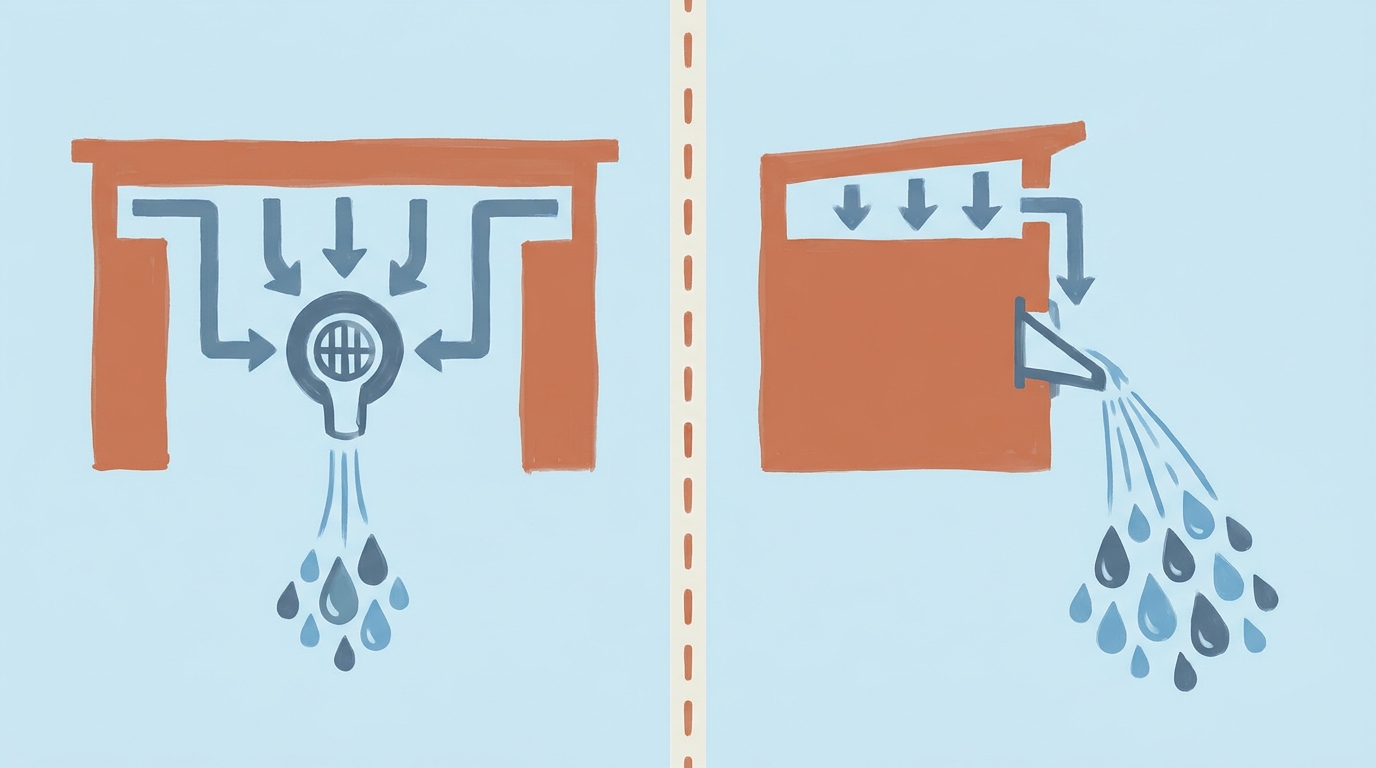
A "flat roof" is the casual name; a "low-slope roof" is the engineering term. The Florida Building Code treats roof assemblies with a slope under 2:12 differently from those at 2:12 or greater, and nearly every commercial roof in Ft Myers — strip centers, warehouses, medical offices along Colonial Boulevard, mid-rise buildings downtown — falls into the low-slope category. The visible flatness hides a deliberate taper that moves water to drains or scuppers.
Truly horizontal roofs pond water, and ponding on a Gulf Coast roof during hurricane season is how leaks, deck rot, and insurance disputes start. If a contractor uses "flat" and "low-slope" interchangeably without talking about slope-to-drain, that's your signal to ask harder questions.
Which commercial roofing systems actually work on Ft Myers low-slope buildings?
Six systems dominate the Ft Myers low-slope market: TPO, PVC, EPDM, modified bitumen, built-up roofing (BUR), and standing-seam metal. SCM Roofing installs all of these commercial systems — TPO, EPDM, PVC, mod-bit, BUR, and standing seam metal — which is useful because the right answer varies by building, not by whichever system a contractor happens to specialize in.
Spray polyurethane foam (SPF) is a seventh option used mainly for recover work over structurally sound substrates. Each system has a different sweet spot for reflectivity, chemical resistance, foot traffic, and wind uplift — the shortcut of "what's the best flat roof?" misses that the best system is the one matched to your building's drainage, rooftop equipment, and budget horizon.
TPO vs EPDM for Ft Myers commercial roofing
This is the question most Ft Myers property managers actually want answered. TPO (thermoplastic polyolefin) is a white, heat-welded single-ply membrane that reflects solar heat — a meaningful advantage in a market where cooling loads run hard from roughly March through October. EPDM (ethylene propylene diene monomer) is a black rubber membrane, typically seamed with tape or adhesive, that handles thermal cycling well but absorbs heat.
For most Ft Myers low-slope roofs over conditioned space — retail, offices, medical — TPO's reflectivity and heat-welded seams make it the stronger default. EPDM tends to make more sense on unconditioned warehouses, roofs with heavy ponding history, or buildings where the owner prioritizes membrane flexibility over cooling savings.
How do the systems compare on cost and lifespan in 2026?
Installed costs vary widely by system, assembly, and project scope; no verified current price list was available for this comparison. Total project cost is a different number from per-square-foot rates, and can range dramatically from small retail spaces to large industrial or warehouse buildings depending on scope. Ft Myers-specific figures depend on tear-off, deck repair, insulation, wind-rated assembly, and permit work, which is why a single per-square-foot number without those line items tends to mislead.
| System | Installed cost (national, per sq ft) | Expected service life | Best fit in Ft Myers |
|---|---|---|---|
| — | Varies by assembly | Cooling-load reduction over conditioned space | |
| — | Varies by assembly | Warehouses, ponding-prone roofs | |
| — | 25–35 years (roofvista.com) | Restaurants, grease exposure, chemical resistance | |
| — | 15–25 years (roofvista.com) | Foot-traffic areas, tie-ins to existing BUR | |
| — | Varies by assembly | Heavy-duty redundancy, legacy systems | |
| — | 40–60 years (roofvista.com) | Long-hold ownership, architectural visibility | |
| — | Varies by coating | Recover work over sound substrate |
Those cost ranges exclude tear-off, and SCM Roofing does not roof over existing layers — the company removes all old material down to the deck before installing a new system, which protects the warranty but adds scope to any bid comparison.
How does the Ft Myers climate change the decision?
Ft Myers sits inside one of the most demanding roofing environments in Florida: hurricane season brings sustained wind and storm threats, UV exposure is intense year-round, and the summer rainy pattern dumps high-volume water onto roofs for months at a time. Low-slope roofs here fail at seams, penetrations, scuppers, and parapet wall tie-ins — not in the middle of the field.
That makes three details more important than the membrane you pick: (1) the slope-to-drain design, including tapered insulation if the deck is dead-level; (2) the wind-rated assembly documentation the local permit office will ask for; and (3) the flashing details at HVAC curbs, drains, and parapets. A $4-per-square-foot membrane installed over a well-detailed assembly outperforms a $7-per-square-foot membrane installed carelessly every time.
When does standing-seam metal make sense over a membrane?
Standing-seam metal is best suited to buildings the owner plans to hold for decades, given its longer expected service life compared to single-ply membranes or modified bitumen — though current pricing should be confirmed through local bids.
For a true low-slope building, metal is usually the wrong tool and a single-ply membrane is the right one. SCM Roofing installs metal roofing in standing seam, metal shingle, stone-coated steel, and corrugated/exposed-fastener styles, so the choice can be driven by the building rather than by what the roofer stocks on the truck.
How should Ft Myers owners evaluate a commercial roofing contractor?
Four non-negotiables: an active Florida state roofing license, documented wind-rated assembly specs for your building's exposure, a written tear-off and deck-repair allowance, and manufacturer certification on the system they're installing. SCM Roofing is led by owner Scott Marone, who graduated from the University of Florida's Construction Management program and holds both a Florida State General Contractor's license and a Roofing Contractor's license, with Florida license number CCC1331132.
The company also holds GAF Master Elite Certified status, a distinction earned by only about 2–3% of roofing contractors nationwide, and brings 25+ years of experience in the roofing industry. For owners managing storm-season risk, emergency and leak repair are available alongside full-replacement work.
Frequently asked questions
Is a flat roof actually flat?
No. What people call a flat roof is almost always a low-slope roof, designed with a shallow pitch that moves water toward drains or scuppers. The Florida Building Code treats these slopes differently from steeper roofs. A truly horizontal roof would pond water, which is why reputable Ft Myers commercial roofers build in slope through tapered insulation or the deck itself.
What is the best roofing system for a flat commercial building in Ft Myers?
For most conditioned commercial buildings in Ft Myers, a TPO single-ply membrane is the default answer because its reflective white surface reduces cooling load in a hot, humid climate and its heat-welded seams resist wind-driven rain. PVC is better for restaurants and any roof exposed to grease or chemicals. EPDM fits unconditioned warehouses. Standing-seam metal fits long-hold buildings with adequate slope.
TPO vs EPDM — which is better for Ft Myers commercial roofing?
TPO is usually better for Ft Myers because its white, reflective surface lowers cooling costs through the long cooling season, and its heat-welded seams perform well against hurricane-driven rain. EPDM — a black rubber membrane — is more cost-effective on warehouses and unconditioned space. No verified current price list was available for this comparison; request itemized local bids for current figures.
How much does commercial roof replacement cost in Ft Myers, FL?
Ft Myers project costs depend on square footage, tear-off, deck condition, insulation, and wind-rated assembly requirements. Total project costs vary widely based on square footage, tear-off, deck condition, insulation, and wind-rated assembly requirements; no verified current price list was available for this comparison. For a current Ft Myers quote, contact SCM Roofing for a site-specific estimate.
How long will a commercial low-slope roof last on a Ft Myers building?
Service life depends on the system and installation quality. Service life varies by system and assembly; standing-seam metal generally offers the longest expected lifespan, followed by single-ply membranes such as PVC, with modified bitumen typically offering a shorter service horizon — though actual performance depends on installation quality and maintenance. Ft Myers' UV exposure, hurricane cycles, and seasonal rain can shorten any of those ranges if drainage or flashing details are weak, which is why installation quality matters as much as membrane choice.
Does Ft Myers hurricane season affect when I should replace a commercial roof?
Yes. Atlantic hurricane season runs June 1 through November 30, so most Ft Myers commercial property owners plan replacement work for the drier months from December through May when possible. Tear-off and membrane installation go faster and cleaner outside the afternoon-thunderstorm pattern of the rainy season. Emergency repair work, by contrast, happens on the storm's schedule, not the calendar's.
Can a new commercial roof be installed over the old one?
Some contractors offer recover systems where code allows, but SCM Roofing does not roof over existing layers — the company removes all old material down to the deck before installing a new roof. That approach costs more upfront but exposes hidden deck damage, qualifies for stronger manufacturer warranties, and avoids the compounding wind-uplift risk of stacked assemblies on a Gulf Coast building.
The bottom line for Ft Myers commercial property owners
If your building looks flat, you almost certainly have a low-slope roof, and the useful question is which membrane or metal system — installed over what drainage design and wind-rated assembly — fits your building, your hold period, and your tenant mix. TPO is the strong default for most conditioned commercial buildings in Ft Myers; PVC, EPDM, modified bitumen, BUR, and standing-seam metal each have narrower sweet spots worth matching to the building rather than the brochure.
Readers in Ft Myers who want this handled professionally can reach SCM Roofing at (855) 726-7663 or https://scmroofingfl.com to schedule a site assessment and get a written, permit-ready scope for comparison.