Hiring an unlicensed roofer in Brandon, FL can leave you with an unenforceable contract, a denied permit, and personal exposure if something goes wrong on your property — and Florida law is unusually direct about it. Under Florida Statutes Chapter 489, roofing is a licensed trade, and the consequences of skipping that verification fall on the homeowner as much as the contractor.
If you're weighing bids for a re-roof after the last round of Gulf Coast storms, this is the part of the process worth slowing down for. Here's what the law actually requires, what it costs you to get it wrong, and how to verify a roofer before you sign.
What Florida Law Requires of Roofing Contractors in 2026
Roofing in Florida requires an active state license issued under Chapter 489. Per F.S. § 489.127, no one may perform, attempt to perform, or even bid on contracting work that requires licensure without holding a valid, active state certificate or registration. Inactive or suspended license status is treated as unlicensed — a detail that trips up homeowners who checked a license once, years ago, and assumed it was still current.
A local occupational license or county certificate of competency does not substitute for the state license. And a business organization performing roofing work must have an appropriately licensed qualifying agent under F.S. § 489.119; without one, the whole company can be treated as unlicensed for that scope of work.
Why This Matters More in Brandon Than in Most Markets
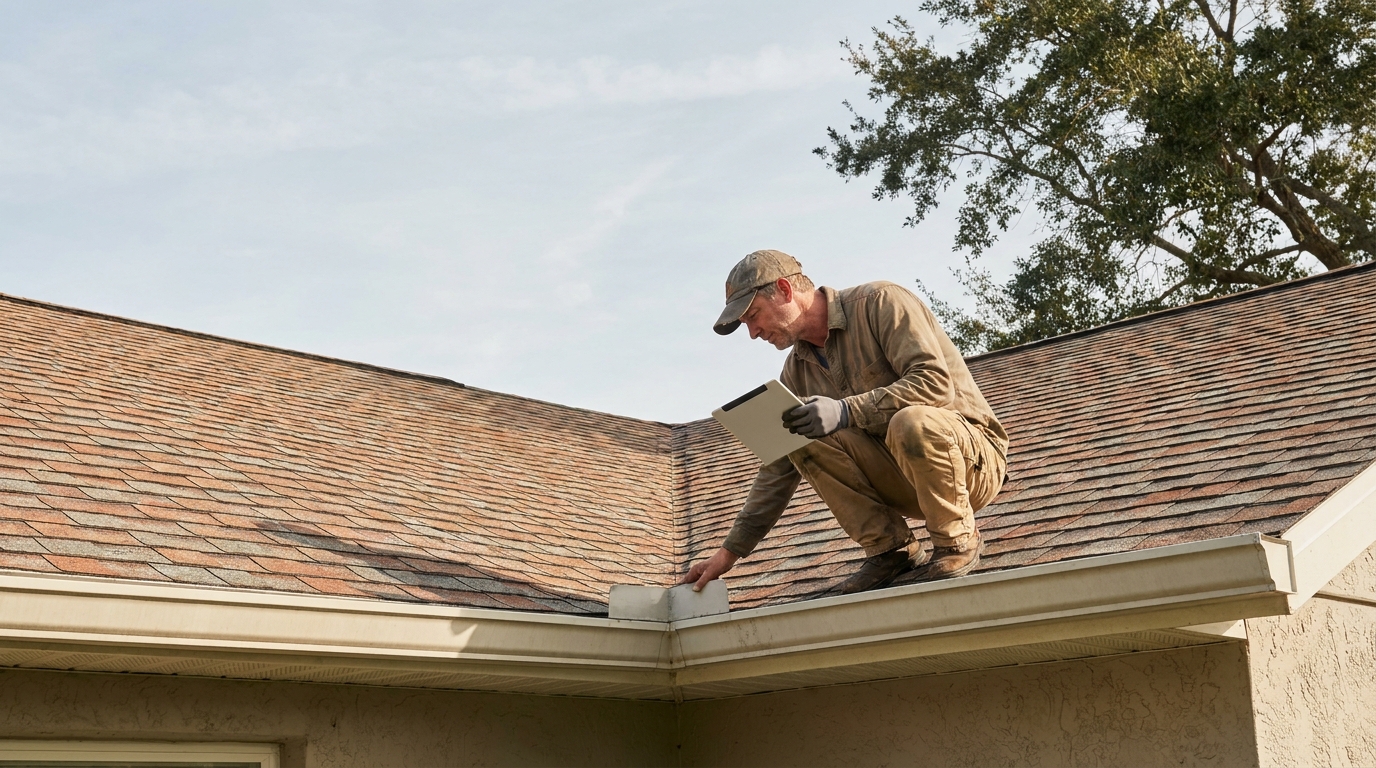
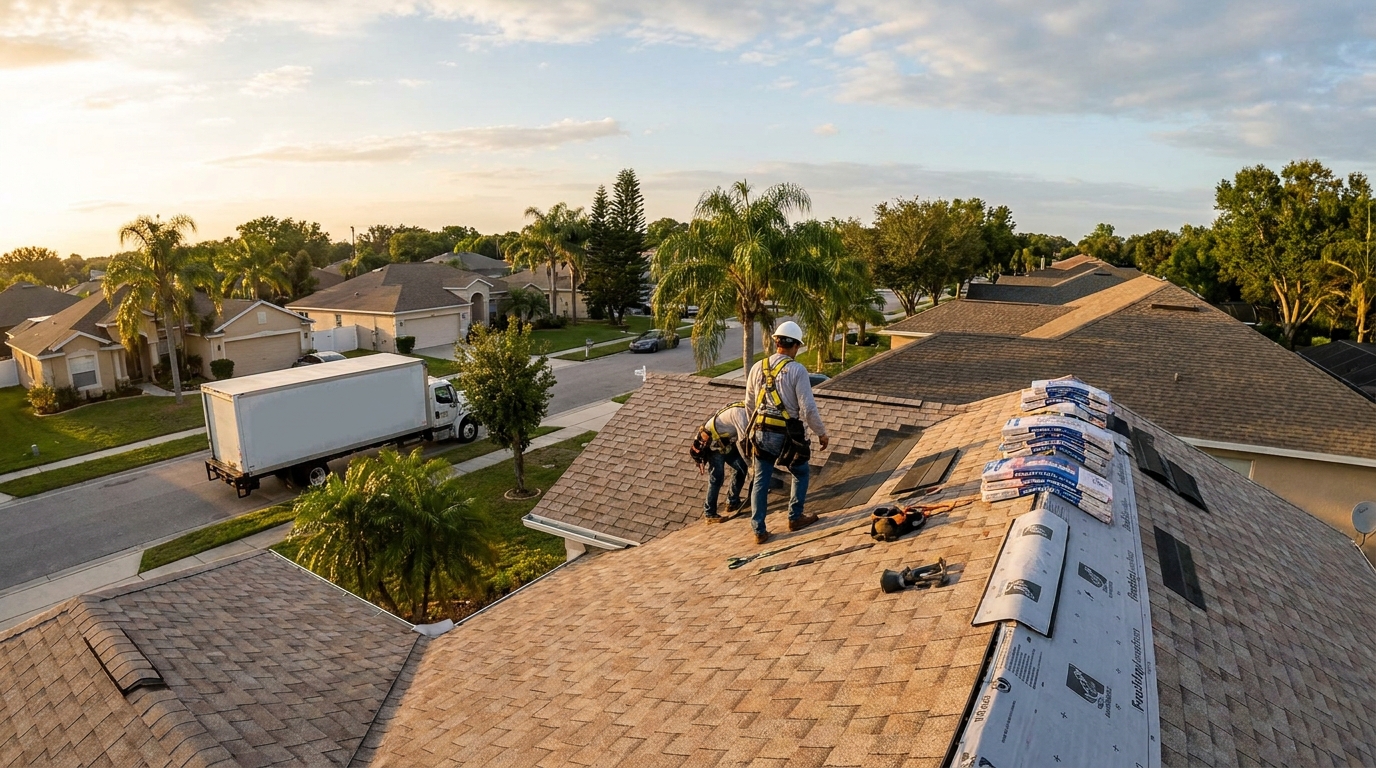
Brandon sits in a stretch of Hillsborough County where tropical storms, summer thunderstorm cells, and hurricane season regularly generate storm-chaser activity. In neighborhoods from Bloomingdale to Providence Lakes to the older housing stock closer to Brandon Boulevard, out-of-town crews often show up in the weeks after a storm offering fast, cash-only roof replacements. Many are perfectly legitimate. Some are not.
Hillsborough County requires permits for roof replacements, and permits require a licensed contractor's information. If the person on your roof can't pull a permit in their own name, someone else's license number is going on that paperwork — which is itself a violation. Under F.S. § 489.127, a licensed contractor may not allow an unlicensed person to use their certification number or obtain a permit unless the licensed contractor actually contracted to perform the work at that property. License lending is prohibited outright.
The Real Consequences of Hiring an Unlicensed Roofer
Your Contract Becomes Unenforceable
Under F.S. § 489.128, contracts entered into on or after October 1, 1990 and performed in whole or in part by an unlicensed contractor are unenforceable in law or equity by that contractor. In plain terms: if the work is defective, abandoned mid-job, or never completed, your legal recourse against the roofer is sharply limited. They also cannot file a valid construction lien against your home — but that protection cuts both ways, because it often means they have no incentive to make things right, either.
Permit Problems and Resale Risk
Roof work done without a proper permit can surface years later during a home sale, an insurance inspection, or a wind mitigation report. Hillsborough County can require permitting after the fact, and unpermitted roofing work may need to be opened up, inspected, or redone to satisfy the building department.
Insurance Coverage Disputes
Florida's Chapter 489 does not explicitly void a homeowner's insurance policy when unlicensed work is involved. But policy language matters. Many Florida homeowner policies contain exclusions for damage arising from work performed in violation of law or code, and insurers scrutinize claims tied to recent roof work — especially in a market as claims-heavy as Tampa Bay. Coverage disputes over an unlicensed roof are common enough to treat as a real risk, not a hypothetical one.
DBPR Fines and Enforcement
The Department of Business and Professional Regulation (DBPR) enforces unlicensed contracting through:
- Administrative fines of up to $10,000 per violation under F.S. § 489.13
- Cease-and-desist orders and civil penalties under F.S. § 455.228
- Criminal referrals where applicable under F.S. § 489.127
Those penalties primarily target the unlicensed contractor, but homeowners who knowingly participate can be drawn into enforcement proceedings, and any money already paid is generally not recoverable through the licensing framework.
How to Check a Roofing Contractor License in Brandon, FL
Florida makes verification straightforward. Before you sign anything or hand over a deposit, do this:
- Search the DBPR license database. Go to myfloridalicense.com and search by the individual's name or business name. Confirm the license is active — not inactive, suspended, or expired.
- Match the name on the license to the name on the contract. The qualifying agent's license should belong to the company you're actually hiring, not to a subcontractor or a friend of the owner.
- Confirm the license category covers roofing. A general contractor's license and a roofing contractor's license are not interchangeable for every scope.
- Ask who is pulling the permit. If the answer is "you, the homeowner" for a full re-roof, that's a warning sign. The licensed contractor should be pulling it.
- Verify insurance separately. Ask for a certificate of insurance sent directly from the insurer, not a photocopy from the contractor's truck.
Red Flags That Point to an Unlicensed Operator
- Door-to-door solicitation immediately after a storm, especially with out-of-state plates
- Cash-only or large upfront deposits with no written contract
- Reluctance to provide a license number, or a number that doesn't match DBPR records
- Refusal to pull the permit in the company's own name
- Bids dramatically below other quotes with no clear reason
- No physical address, only a P.O. box or a cell phone
Where a Licensed Local Roofer Fits In
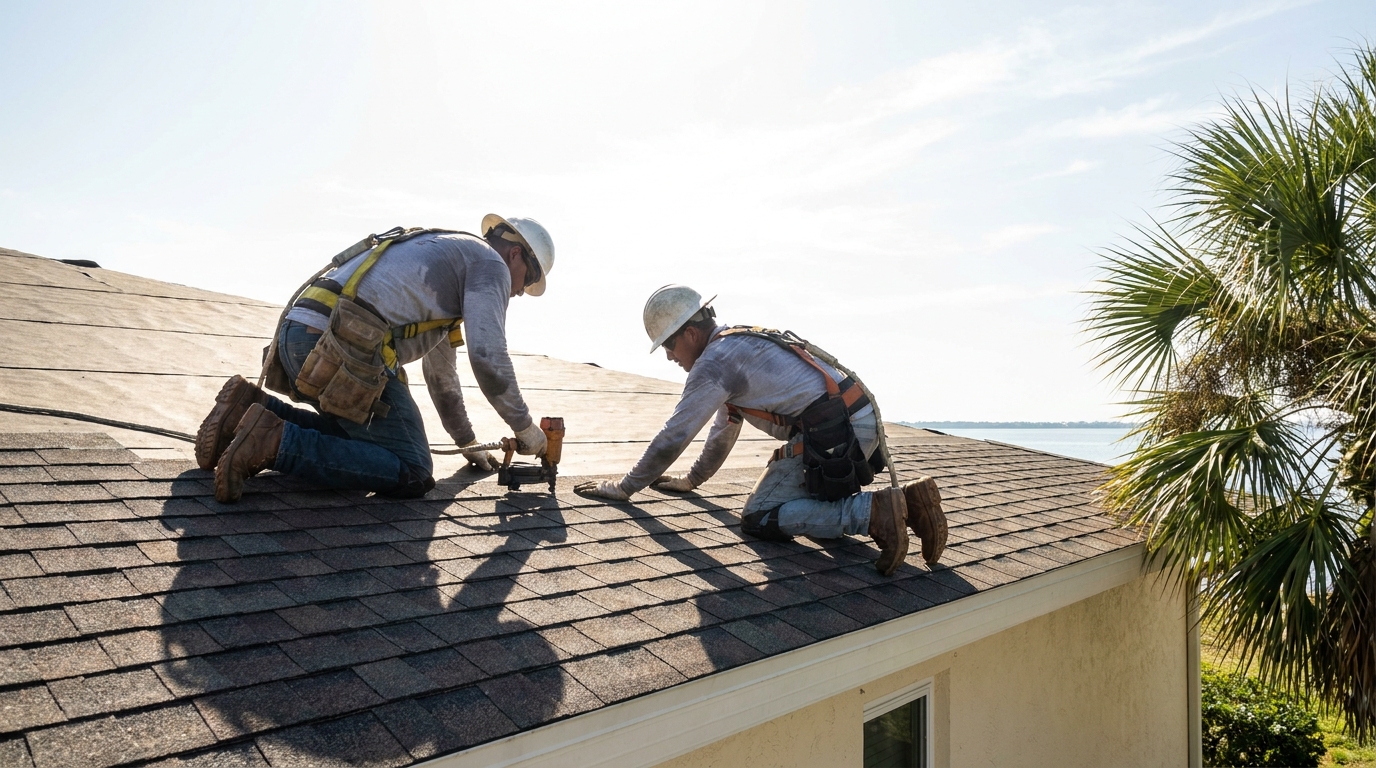
A properly licensed Brandon roofing contractor carries the qualifying agent, the permit responsibility, the workers' comp and liability insurance, and — critically — the legal standing to warranty the work. That's the framework Florida built into Chapter 489, and it's the framework that protects you when a roof installed today has to perform through a decade of Tampa Bay hurricane seasons.
SCM Roofing, LLC operates as a licensed Florida roofing contractor serving Brandon and the surrounding Hillsborough County area, handling shingle roofing, tile, metal, and commercial roofing work under the state's licensing framework. That means permits pulled correctly, contracts that are enforceable, and a business that's still accountable long after the crew leaves your driveway.
Frequently Asked Questions
Is it illegal for me as a homeowner to hire an unlicensed roofer in Florida?
The primary legal exposure falls on the unlicensed contractor, but homeowners who knowingly hire one can lose contract enforceability under F.S. § 489.128, face permit and resale complications, and risk insurance coverage disputes. Florida treats this as a homeowner-protection statute, and the protections largely disappear when you knowingly step outside them.
What if the roofer says they work under someone else's license?
That arrangement is prohibited unless the actual licensed contractor contracted to perform the work at your property. F.S. § 489.127 makes license lending a violation for both parties. If the person doing the work isn't employed by or genuinely engaged through the licensed company, the license doesn't cover the job.
How much can DBPR fine an unlicensed roofer in Florida?
DBPR may impose an administrative fine of up to $10,000 per violation under F.S. § 489.13, along with cease-and-desist orders and civil penalties under F.S. § 455.228. Enhanced penalties may apply for unlicensed contracting during a declared state of emergency — worth confirming against the current statute if that applies to your situation.
Does a local Hillsborough County license count as a state roofing license?
No. A local construction license or certificate of competency does not substitute for the state license required under Chapter 489 for roofing work in Florida.
Bottom Line for Brandon Homeowners
Your roof is the single largest weather-facing system on your home, and Florida wrote Chapter 489 specifically to keep it in licensed hands. Verifying a license takes about five minutes on myfloridalicense.com. Skipping that step can cost tens of thousands.
Homeowners in Brandon, FL who want a licensed local team to handle inspection, permitting, and installation the way the statute intends can reach SCM Roofing, LLC at https://scmroofingfl.com for a free estimate. Nothing in this article is legal advice — for questions about a specific contract or claim, talk to a licensed Florida attorney.