Ask any homeowner who has ridden out a Gulf Coast hurricane season what they want most from a roof, and the answer usually comes down to one word: longevity. In Sarasota, that question is more complicated than it sounds. Salt air rolls in off the bay, afternoon storms hammer shingles from May through October, and the summer sun bakes attic decks to temperatures that would warp lesser materials.
So which roofing material actually holds up longest under Florida's climate? The honest answer is that two materials pull ahead of the pack for local homes — metal and tile — and each earns its longevity in a different way.
What "Longest Lasting" Really Means on the Gulf Coast
Lifespan on a spec sheet and lifespan on a Sarasota roof are not the same number. A roof here has to survive UV exposure, humidity that rarely drops below oppressive, wind-driven rain, and the occasional named storm tracking up from the Keys or in off the Gulf.
Florida's building code treats roofs as engineered wind systems. That means the underlayment, fasteners, and flashing details often determine longevity more than the surface material itself. A premium tile roof with a tired underlayment is a leak waiting to happen.
With that framing, here's how the two long-life contenders actually perform for homes from Palmer Ranch to Siesta Key.
Metal Roofing: The Long-Distance Runner
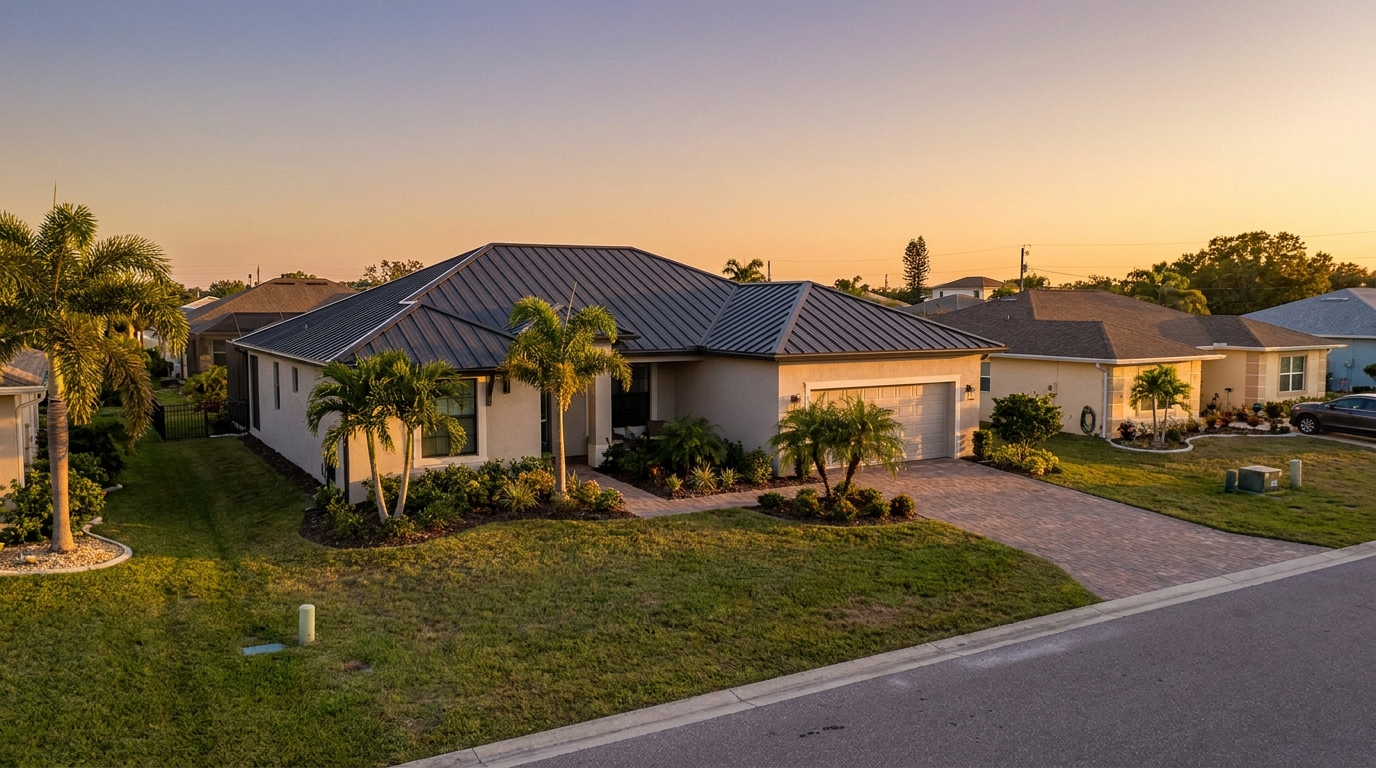
Metal roofing is commonly cited in Florida guides as lasting roughly 40 to 70 years, with some systems reaching further depending on the metal, coating, and installation quality. For a coastal city like Sarasota, that longevity is driven by a few specific traits.
Metal is light. It fastens as a continuous system. And when it's specified correctly — the right alloy, the right coating, the right gauge — it can be engineered to resist the wind loads required by Florida code for local design pressures. SCM Roofing, LLC installs metal roofing in standing seam, metal shingle, stone-coated steel, and corrugated and exposed-fastener styles, giving homeowners a range of options suited to different budgets and roof geometries.
Where Metal Earns Its Lifespan
- Wind performance: Continuous panels and concealed fasteners resist uplift, a major failure mode during hurricane season.
- Heat behavior: Reflective coatings and vented assemblies reduce the thermal load that ages a roof from the deck up.
- Low maintenance: Periodic inspection is usually enough to keep a metal roof in service for decades.
- Weight: Light enough to install on older Sarasota homes — including many mid-century ranches west of the Trail — without structural reinforcement.
Where Metal Struggles
The coastal environment is unforgiving to the wrong metal. Corrosion and denting are real risks if the alloy or coating is mismatched to salt exposure, and severe impact can dent thinner gauges. This is why material selection matters as much as the brand name on the panel. For Sarasota homes close to the Gulf or the bay, the panel material, fasteners, flashing, and accessories should all be specified for salt exposure — a specification conversation to have before any contract is signed.
Because no two roofs are identical, the installed cost of a metal system depends on panel type, gauge, finish, clip or fastener system, roof complexity, tear-off, deck condition, and permitting. Contact SCM Roofing, LLC for a current, itemized estimate on your specific home.
Tile Roofing: The Multi-Generational Option
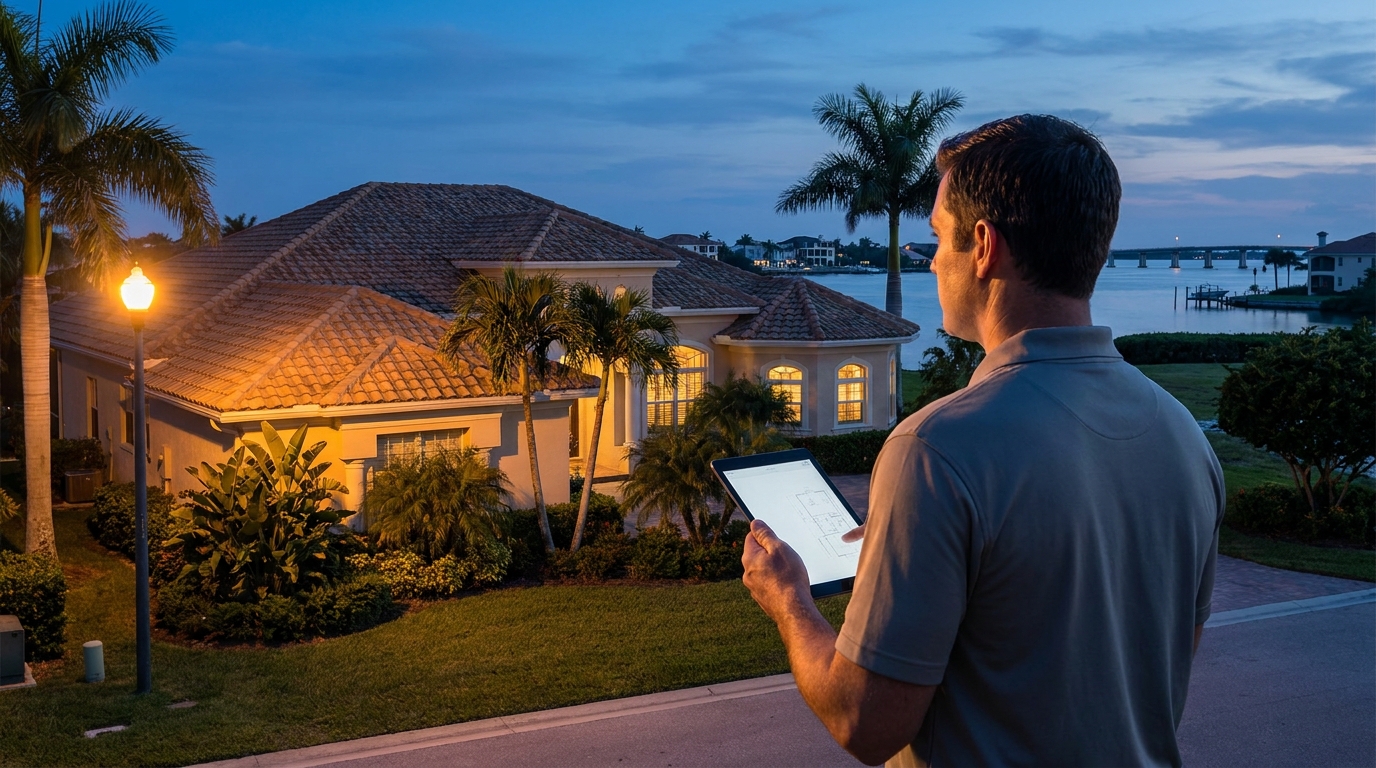
Tile — clay or concrete — is the other serious contender, and on paper it's the longest-lived surface you can put on a Sarasota home. Tile itself is often cited at 50 to 100-plus years. The catch: the underlayment beneath it typically needs replacement well before the tile is worn out, commonly in a range of roughly 15 to 25 years depending on the underlayment type and exposure.
That distinction matters. When homeowners in neighborhoods like West of Trail, Bird Key, or older parts of downtown Sarasota talk about a "lifetime" tile roof, they usually mean the tile itself. The waterproofing layer underneath is on its own clock. SCM Roofing, LLC installs tile roofing using concrete and clay tile and performs underlayment replacement when that layer reaches the end of its service life.
Where Tile Earns Its Lifespan
- Material durability: Clay and concrete tile don't corrode, don't rot, and don't degrade under UV the way many surfaces do.
- Thermal mass: Tile slows heat transfer into the attic, which helps the entire roof assembly age more gracefully in Florida heat.
- Fire and wind: Properly assembled tile systems are typically Class A for fire, with wind performance dependent on the fastening method, roof geometry, and approved system design.
- Aesthetic longevity: The Mediterranean and Spanish profiles fit Sarasota's architectural character in ways few materials can match.
Where Tile Struggles
Tile is heavy. Some homes need structural review before installation, particularly older stock that wasn't originally engineered for the load. Tile is also brittle — cracked tiles from foot traffic, falling debris, or storm impact are a recurring maintenance item, and repairs are more delicate than they look.
Installed cost depends on tile product, attachment method, roof geometry, structural requirements, underlayment, and labor. Clay tile and complex roof profiles typically carry higher installed costs than standard concrete tile on a straightforward roof. Contact SCM Roofing, LLC for a project-specific estimate.
Head-to-Head on Florida Longevity
If longevity is the only lens, tile edges metal on the surface material — but only if the underlayment is maintained on schedule. Metal wins on continuous-system performance and lower maintenance, which is why it's frequently described in Florida guidance as the more storm-resilient, upkeep-friendly choice.
For most Sarasota homeowners, the practical decision comes down to three questions:
- Is your home structurally suited to tile, or better matched to a lighter system?
- Do you want a roof that asks very little of you, or are you comfortable managing tile inspections and underlayment cycles?
- Does your neighborhood's architectural character reward a tile profile, or is a standing-seam or architectural metal look equally at home?
What Actually Makes a Roof Last in Sarasota
Material choice sets the ceiling. Installation determines whether you hit it. Florida's permit and inspection requirements exist because so many premature roof failures trace back to fastener patterns, flashing details, and underlayment specification — not the surface material itself.
Neither material is automatically watertight or maintenance-free. The deck, underlayment, edge metal, flashing, fasteners or clips, ventilation details, and penetrations all affect how long a roof performs. A new roof should be evaluated as a complete assembly, not just by its surface covering.
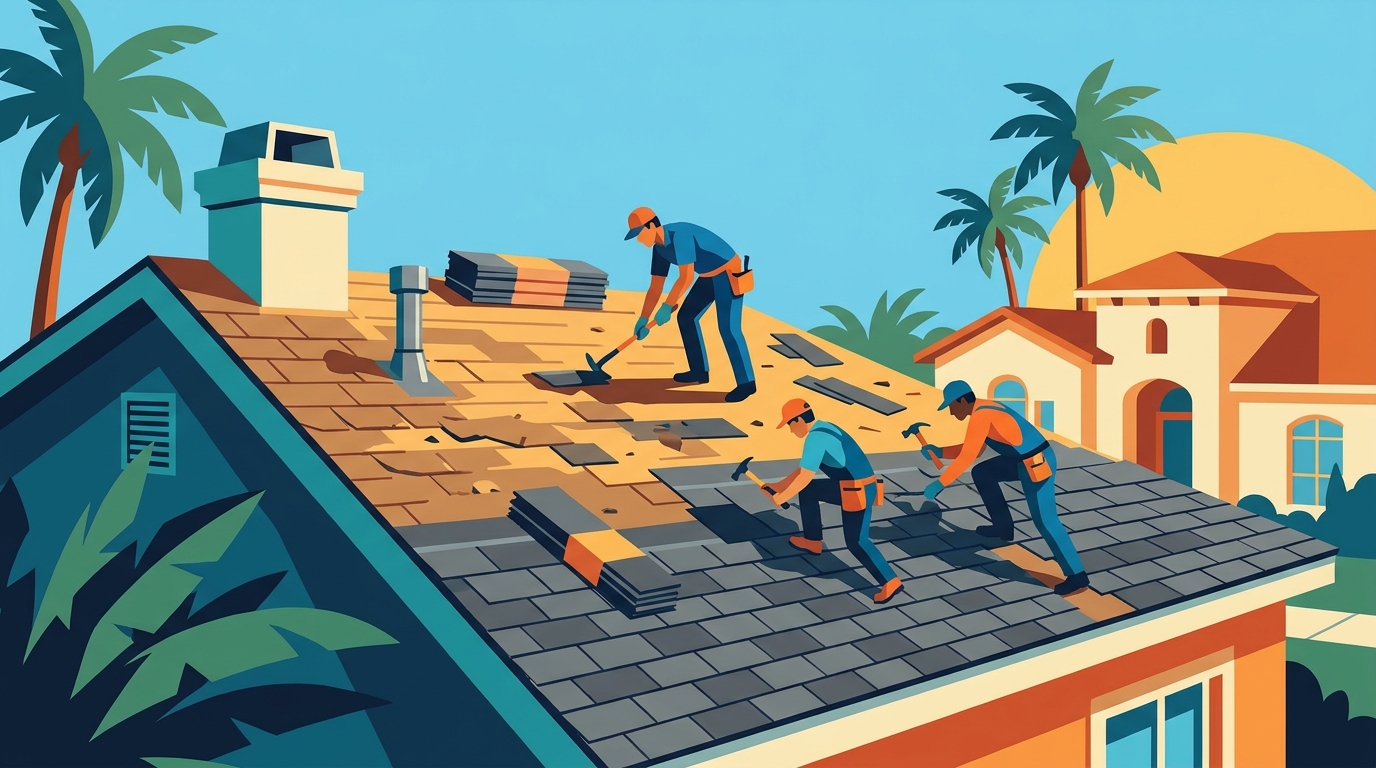
For homeowners planning replacements, timing matters too. Scheduling work outside the peak of hurricane season, and well before the summer rainy pattern sets in, gives crews the dry windows they need to install a system correctly. With 25-plus years of roofing experience and crews who are employees rather than recently hired subcontractors, SCM Roofing, LLC works with Sarasota homeowners on both metal and tile systems and can walk through which material fits a specific home, roof geometry, and budget.
Frequently Asked Questions
Does metal really last longer than shingles in Florida heat?
Yes. Florida guidance commonly puts metal roofing at 40 to 70 years, well beyond the service life most asphalt shingle systems achieve in this climate. The combination of reflective coatings, continuous fastening, and resistance to UV degradation is what drives the gap.
How often does a tile roof's underlayment need to be replaced?
Roughly every 15 to 25 years, depending on the underlayment type and exposure. The tile itself often outlives multiple underlayment cycles, which is why tile roofs are sometimes "lifted and relaid" rather than fully replaced.
Is metal roofing a corrosion risk this close to the Gulf?
It can be if the wrong alloy or coating is specified. Coastal Sarasota homes benefit from metals and finishes selected specifically for salt exposure. The panels, fasteners, flashing, and accessories should all be specified for the coastal environment — this is a conversation to have before signing any contract, not an after-the-fact fix.
Which material handles hurricane winds better?
Both can perform well when installed to current Florida code as a complete, approved assembly. Wind performance depends on the specific panel or tile product, the attachment system, roof geometry, edge details, and the design pressures applicable to your home — not the material name alone. Ask any contractor for Florida Product Approval documentation and the fastening schedule for the proposed system.
How do I know if my home's structure can support tile?
A qualified roofing professional or structural engineer can assess the existing framing, deck, and attachment points against the load of the proposed tile assembly. This review is especially important if you are switching from a lighter covering to tile, or if the home has experienced prior storm or water damage. Do not assume the current structure is rated for tile without confirmation.
How often should I have my roof inspected in Sarasota?
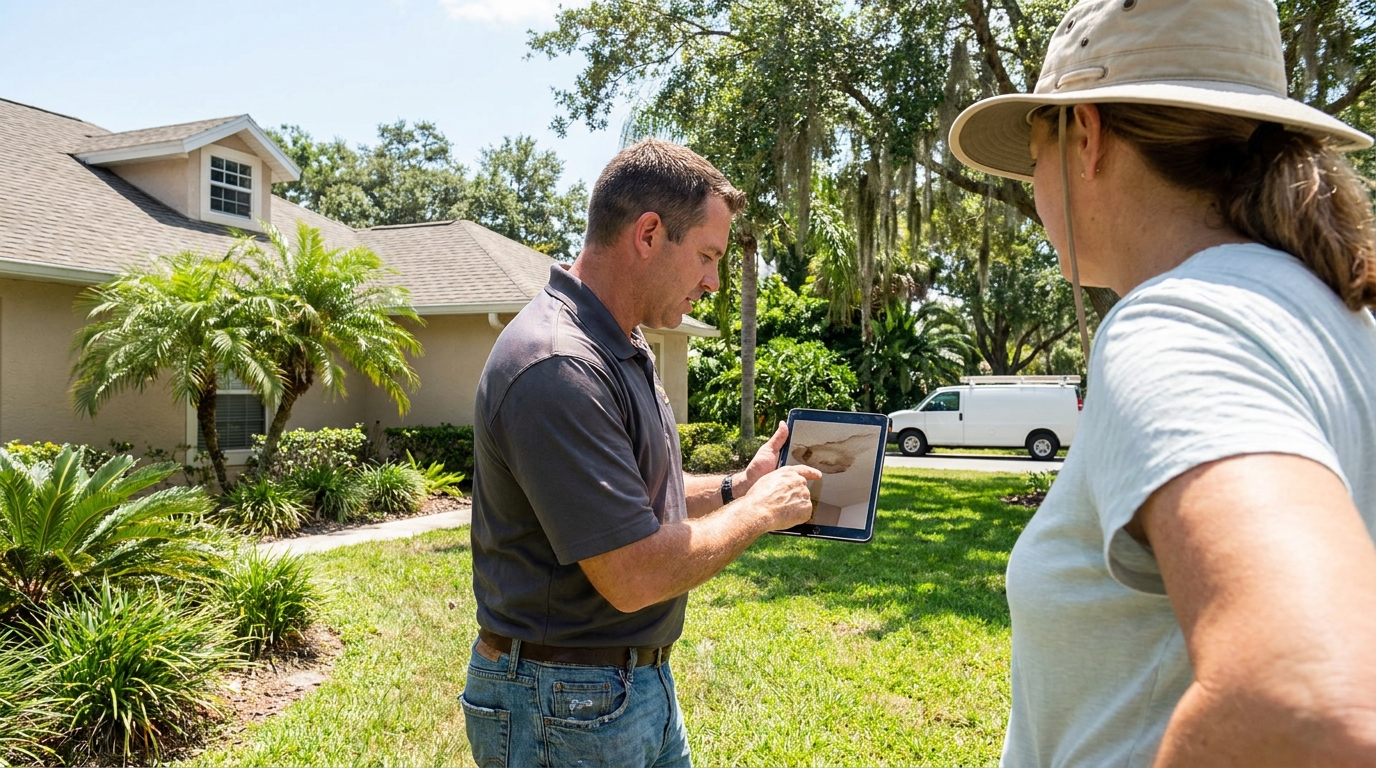
Twice a year is the standard recommendation for Florida homeowners — once before hurricane season begins in June and once after it ends in November. A professional inspection covers structural condition, roofing material condition, flashing and fastener details, and an attic check. Catching small issues early is far less costly than addressing storm-season failures after the fact.
The Bottom Line for Sarasota Homeowners
If your priority is the longest-lived surface material and your home's architecture calls for it, tile is difficult to beat — provided you're willing to maintain the underlayment on schedule. If you want maximum storm resilience, lower weight, and minimal upkeep across decades of Florida weather, metal is usually the stronger long-run choice.
SCM Roofing, LLC holds a 4.9-star rating from 239 Google reviews as of April 2026, with customers consistently noting quality materials, professional installation, and strong communication throughout the process. Sarasota homeowners who want either system evaluated on their specific home can reach SCM Roofing, LLC at https://scmroofingfl.com or by calling (855) 726-7663 for a free inspection and estimate with no obligation.