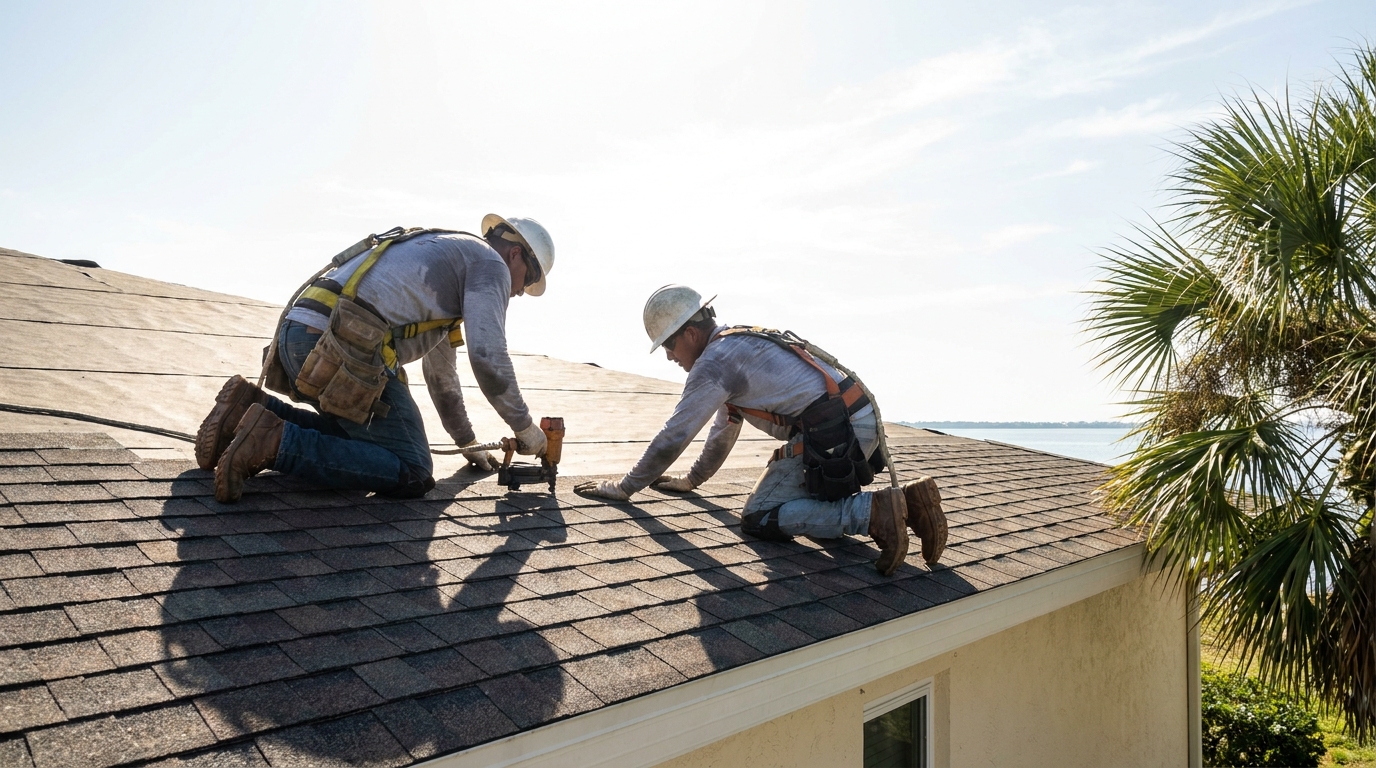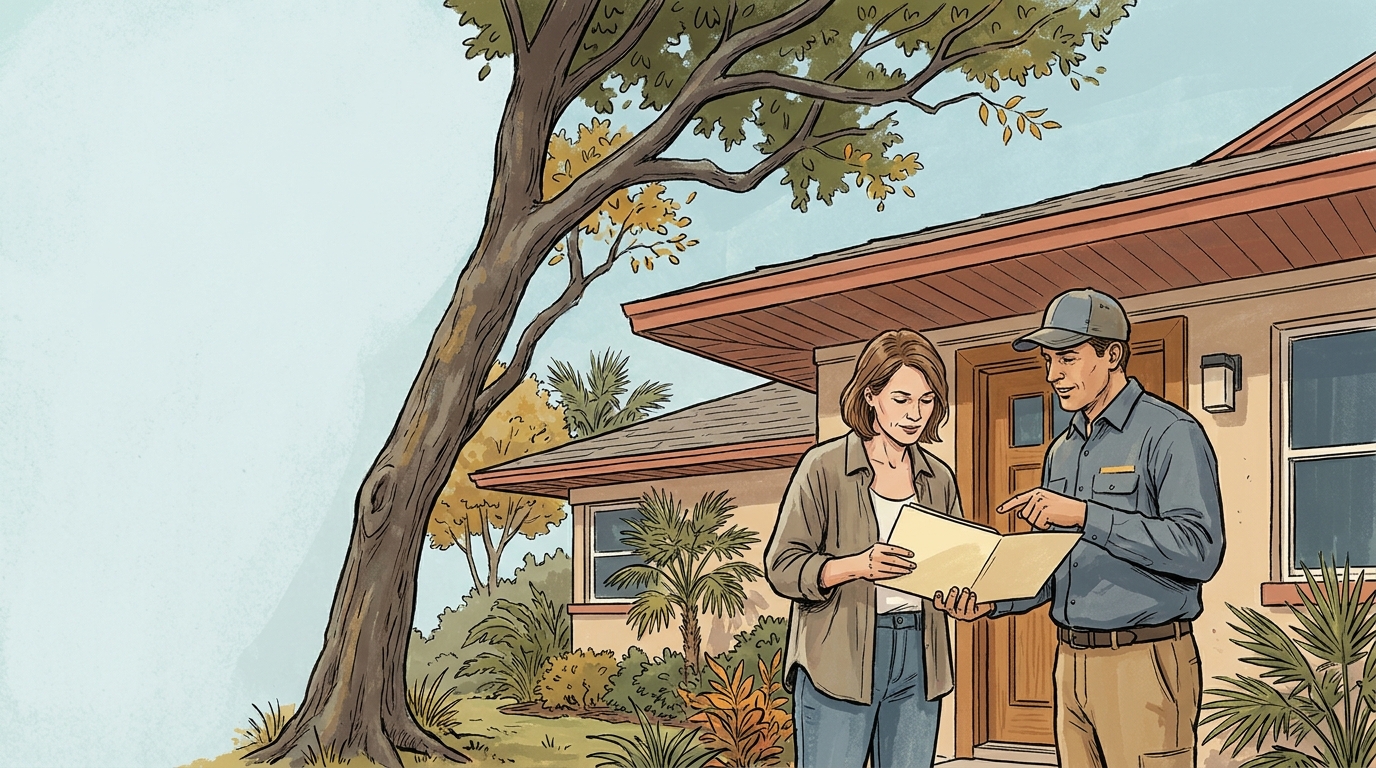
A brown ring on your Tampa ceiling after a rainstorm almost always points to one of three sources: a roof leak (most common after heavy rain or wind-driven rain from the Gulf), a plumbing leak from a supply line or drain running above the ceiling, or condensation dripping from an attic HVAC unit or uninsulated ductwork. The timing, location, and shape of the stain tell you which one. If the stain appears only during or right after rain, the roof is the prime suspect — and in Tampa's climate, that suspicion is usually correct.
Below is the diagnostic logic Tampa homeowners can use to isolate the cause before calling anyone, plus guidance on when a roofer is the right first call versus a plumber or HVAC tech.
Does the stain only appear after it rains?
If the ceiling stain shows up, grows, or darkens only during and after rainfall, the source is almost certainly your roof or the flashing around a roof penetration. Plumbing leaks are constant or intermittent based on water use — they don't wait for weather. Condensation leaks track humidity and AC runtime, not rain. Rain-correlated staining is the single strongest signal you have a roofing problem.
Track it for one dry week and one wet week. If the stain is stable when it's dry and worsens when it rains, stop looking at pipes. In Tampa, where afternoon thunderstorms and tropical systems dump several inches in an hour, even a small breach in the roof envelope will show up on a ceiling within 24 hours.
Where on the ceiling is the stain located?
Location narrows the source fast. Stains near an exterior wall, under a valley, around a chimney, or beneath a roof penetration (vent stack, skylight, satellite mount) point to the roof. Stains directly under a bathroom, kitchen, or laundry room on the floor above point to plumbing. Stains near or directly under an attic air handler point to HVAC condensation.
At SCM Roofing, we've traced hundreds of Tampa ceiling stains, and the pattern holds: a stain in a first-floor hallway ceiling of a two-story home in South Tampa is usually plumbing. A stain on the top-floor ceiling of a single-story bungalow in Seminole Heights, especially near the eave or a valley, is almost always the roof.
What does the shape and color of the stain tell you?
Roof leaks typically produce round or oval brown stains with a darker ring around the edge, caused by mineral and tannin deposits as water evaporates. Plumbing leaks from clean supply lines often produce lighter, more diffuse stains without the dark ring. Drain-line leaks look similar to roof leaks but stay wet longer. Condensation stains are usually gray, streaky, or mildewed rather than brown.
A single dark ring that grows a little each storm is the classic roof-leak signature. Multiple small stains along the same line often follow a rafter or a run of ductwork.
How do you trace a roof leak to the ceiling stain in Tampa?
Water rarely enters the roof directly above the stain. It enters at a compromised point — a lifted shingle, cracked boot, failed sealant, or damaged flashing — then travels along the underside of the decking or down a rafter until it finds a low point to drip. In Tampa homes with low-slope or complex roofs, that horizontal travel can be several feet.
To trace it, go into the attic during or immediately after a rainstorm with a flashlight. Look for wet decking, water trails on rafters, rusted nail tips, or matted insulation. Follow any wet trail uphill to its highest point — that's your entry. Common Tampa entry points include:
- Pipe boots cracked from years of UV exposure (typically fail at 8-12 years in Florida sun)
- Nail pops on shingles lifted by tropical storm winds
- Failed sealant at chimney or wall flashing
- Damaged or missing shingles from hurricane season debris
- Clogged or backed-up valleys full of oak leaves
When is it plumbing instead of the roof?
It's plumbing when the stain appears regardless of weather, worsens after showers or laundry loads, or sits directly under a wet room on the floor above. Supply-line leaks often drip continuously; drain-line leaks pulse with use. If you shut off the main water valve for a few hours and the stain stops growing, you have a plumbing leak, not a roof leak.
A plumber is the right first call in that scenario. Roofers can inspect the roof to rule it out, but the fix lives inside the wall or floor cavity.
When is it HVAC condensation?
Tampa's humidity makes attic air handlers a common source of ceiling stains that mimic roof leaks. If your air handler sits in the attic and the stain is directly below or near it, check the condensate drain pan and the primary and secondary drain lines. A clogged condensate line — extremely common during Tampa's humid summer months — backs water into the pan, which overflows onto the ceiling.
Uninsulated ductwork in a hot, humid attic can also sweat heavily and drip. HVAC condensation stains typically appear during heavy AC use, not during rain, and often have a musty or mildewed edge.
Diagnostic quick-reference for Tampa homeowners
| Symptom | Likely Source | Who to Call First |
|---|---|---|
| Stain grows only during/after rain | Roof leak or flashing failure | Roofer |
| Stain under bathroom/kitchen on floor above | Plumbing supply or drain | Plumber |
| Stain near attic air handler, worse in summer | Condensate line or duct sweat | HVAC tech |
| Stain near roof penetration (vent, chimney, skylight) | Failed boot, flashing, or sealant | Roofer |
| Stain along exterior wall on top floor | Roof edge, drip edge, or fascia leak | Roofer |
| Gray, streaky stain, no clear timing | Condensation or humidity | HVAC tech |
Why Tampa's climate makes this diagnosis urgent in 2026
Tampa sits in one of the most punishing roofing environments in the country. The Gulf Coast climate combines year-round UV exposure, sustained high humidity, salt air, and an Atlantic hurricane season that runs June through November. Florida Building Code requires roofing work in high-velocity wind zones to meet strict uplift and fastening standards, and Hillsborough County requires permits for most re-roofing and significant repair work.
A minor stain ignored in June can become sheathing rot, mold, and interior drywall replacement by October. Wet insulation loses R-value immediately, and Tampa attics that stay wet grow mold within days, not weeks. If you see a stain heading into peak hurricane season, get eyes on the roof before the next tropical system.
When should you call a roofer versus try to find it yourself?
Call a roofer when the stain is rain-correlated, when you see any wet decking or trails in the attic, when the roof is over 10 years old, or when you can't safely inspect the attic. Skip the DIY hunt if you have a tile roof, a steep pitch, or a two-story home — walking a Tampa roof in summer heat is genuinely dangerous, and misdiagnosing the source often costs more than the inspection would have.
SCM Roofing is GAF Master Elite certified and holds a 4.9-star rating across 239 Google reviews from Tampa-area homeowners. One recent customer described the team as handling their repair with "utmost professionalism, speed, and honesty" — the kind of diagnostic work that separates a targeted repair from an unnecessary re-roof.
Frequently Asked Questions
How long after a roof leak starts will a ceiling stain appear?
In Tampa's humid climate, a visible ceiling stain typically appears within 24 to 72 hours of the first significant water intrusion, though slow leaks may take weeks to show. Once the drywall paper absorbs enough water to discolor, the stain expands with each subsequent rain. If a stain appears suddenly after one storm, the breach is usually recent and significant.
Can a ceiling stain appear without an active roof leak?
Yes. Old stains from a previously repaired leak can remain visible until the drywall is primed with a stain-blocker and repainted. High attic humidity can also cause condensation stains that mimic leaks. If a stain hasn't grown in months and there's no fresh water damage in the attic, you may be looking at a cosmetic issue rather than an active leak.
Is a small ceiling stain worth calling a roofer for in Tampa?
Yes, especially before hurricane season. A small stain almost always means water is already inside the roof assembly, and Tampa's humidity accelerates rot and mold growth in wet decking and insulation. A professional inspection typically costs far less than the interior repairs required if the leak worsens during a tropical storm. Early diagnosis usually means a targeted repair rather than a full re-roof.
Will homeowners insurance cover ceiling water damage in Tampa?
Florida homeowners policies typically cover sudden and accidental water damage — for example, damage from a storm-caused roof breach — but exclude damage from long-term wear, poor maintenance, or gradual leaks. Coverage varies by policy and carrier, so document the stain with photos and dates, get a professional roof inspection, and consult your insurer before assuming coverage. Hurricane deductibles apply separately for named storms.
Can I just paint over a ceiling water stain?
Only after the leak is fixed and the drywall is fully dry. Painting over an active leak traps moisture, feeds mold, and hides the ongoing damage until the ceiling fails structurally. Once the source is repaired and the area has dried for several days, a stain-blocking primer followed by ceiling paint will cover the mark. Skipping the primer lets the tannin bleed through fresh paint within weeks.
How much does it cost to fix a roof leak causing a ceiling stain in Tampa?
Targeted roof leak repairs in the Tampa area typically range from a few hundred dollars for a single pipe boot replacement or shingle repair to several thousand for flashing rebuilds or valley repairs. Cost depends on roof pitch, material, access, and the extent of underlying decking damage. Requesting an itemized estimate with photos of the failed component protects you from unnecessary upsells.
Getting it diagnosed correctly
A ceiling stain is a symptom, not a diagnosis. The value of a good inspection is knowing exactly which of the three sources — roof, plumbing, or HVAC — is actually causing the problem, so you spend money on the right fix instead of guessing. In Tampa's climate, guessing wrong for a season is expensive.
Homeowners in the Tampa area who want the roof side of that diagnosis handled professionally can reach SCM Roofing at https://scmroofingfl.com to schedule an inspection and get a clear answer on what's actually leaking.