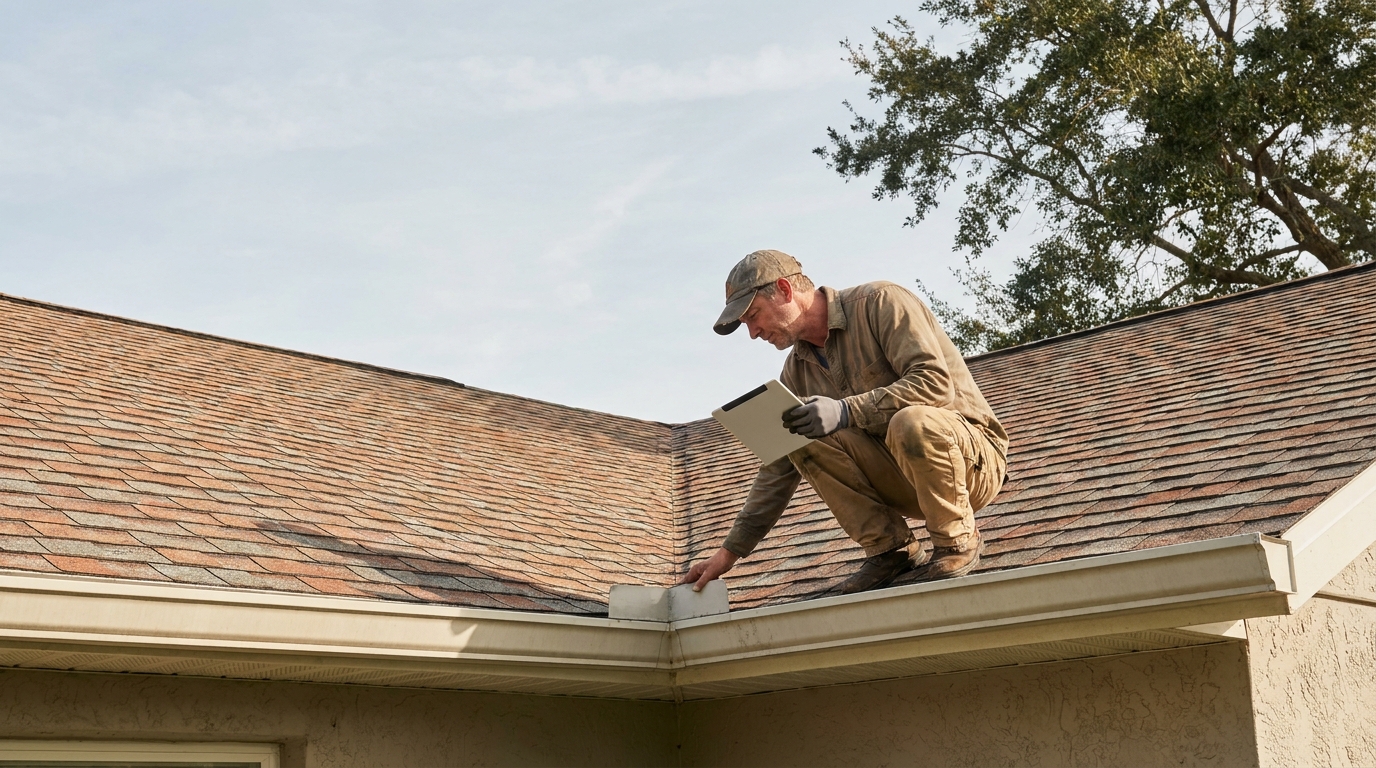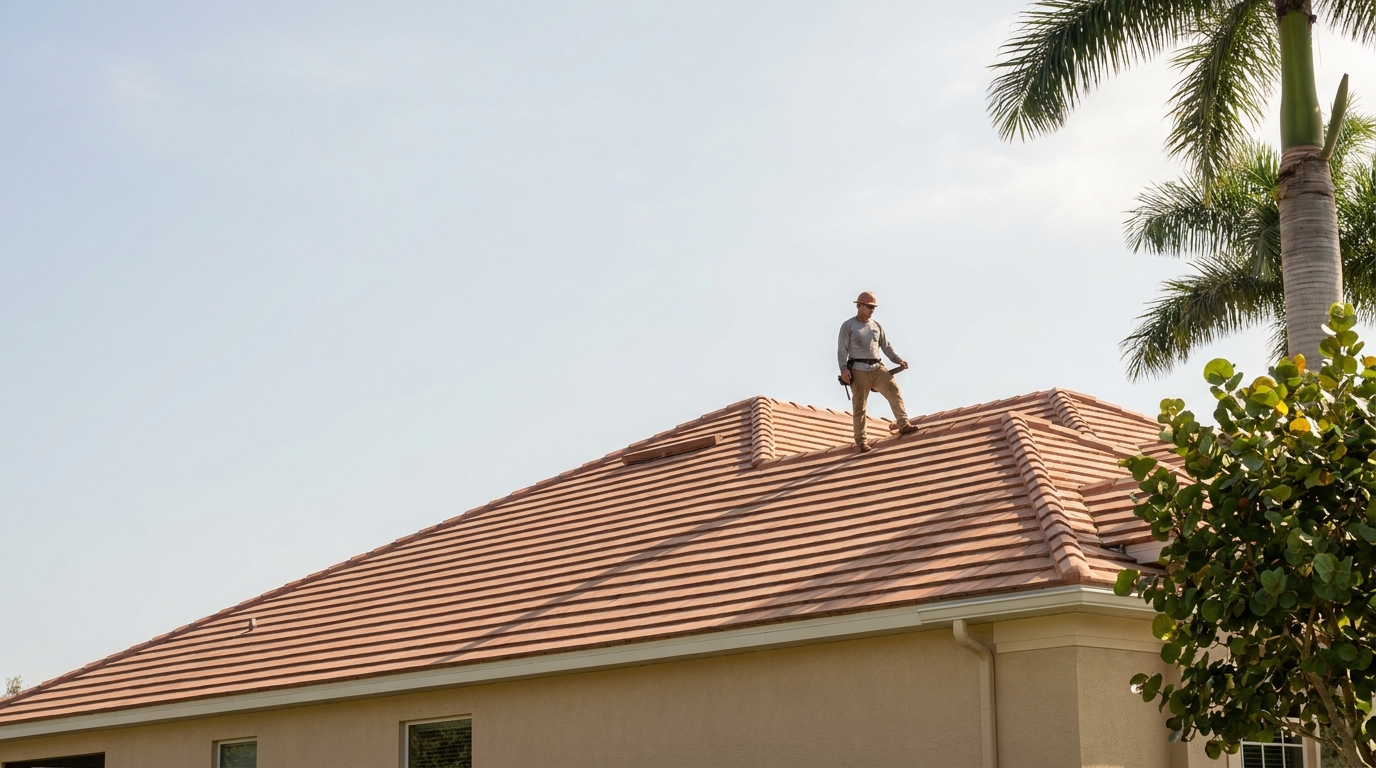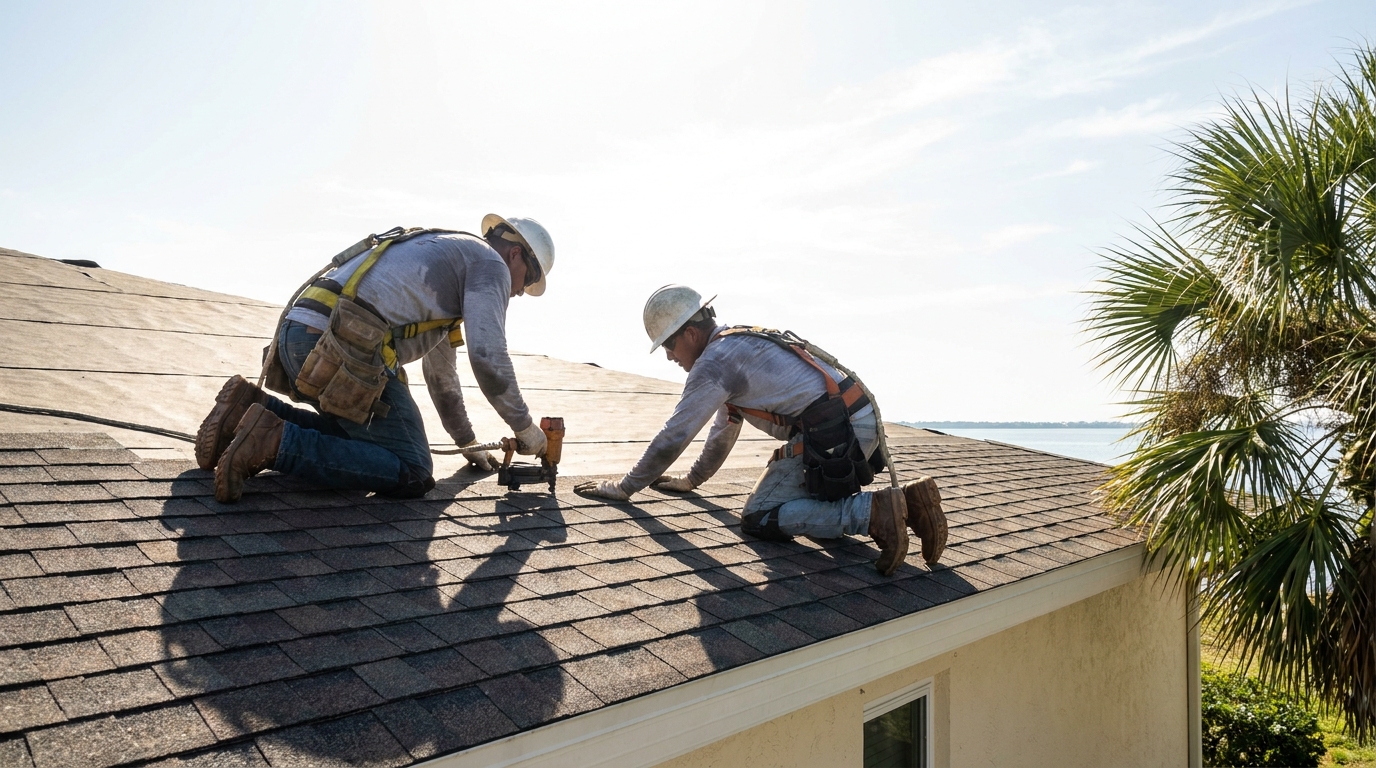
If water is coming through your Tampa ceiling right now, do three things in this order: move belongings and place buckets under the drip, photograph everything before you touch it, then call a licensed local roofer for emergency tarping. Do not climb onto a wet roof yourself. Most Tampa homeowners can stabilize the interior in under 30 minutes and have a professional tarp installed within a few hours if they call early.
What should I do in the first hour of a roof leak in Tampa?
In the first hour: contain the water indoors, kill power to any affected circuits, photograph every wet area, and call a licensed Tampa roofer for emergency tarping. Move furniture, lay towels, place buckets, and puncture a small hole in a bulging ceiling to release pooled water into a container — a controlled drip is safer than a collapsing drywall pocket.
Tampa's summer storm cells and Gulf-driven hurricane bands can dump three to six inches of rain in an hour. Once water is inside the attic, it spreads across ceiling joists and shows up rooms away from the actual roof breach. Speed matters — every hour of standing moisture increases the odds of mold within the 24–48 hour window the EPA flags as the mold-growth threshold.
If the leak is near a light fixture, ceiling fan, or outlet, flip that circuit at the breaker before you go near it. Then start your photo log — wide shots of the room, close-ups of the stain, and any visible exterior damage from the ground.
When should I tarp the roof myself versus call someone?
Call a professional for tarping in almost every Tampa scenario. Do it yourself only if the roof is single-story, dry, the pitch is shallow, and the weather is clear — and even then, only if you have a spotter and proper anchoring. Wet Florida shingles, tile, and metal roofs are extraordinarily slick, and falls from residential roofs send thousands of homeowners to the ER each year.
Emergency tarping is not a bedsheet and some bricks. A proper tarp is 6-mil or heavier poly, cut oversized, wrapped around 2x4 anchor boards, and screwed into the decking above the damaged area so wind cannot lift it. In Tampa's afternoon gust patterns, an improperly secured tarp becomes a sail within minutes and often causes more damage than it prevents.
SCM Roofing, LLC handles emergency tarping across Hillsborough County — South Tampa, Carrollwood, Brandon, New Tampa, and the neighborhoods around the University of South Florida — and can typically get a crew out the same day for active leaks.
Who should I call for a roof emergency in Tampa?
Call a Florida-licensed residential roofing contractor first, not a general handyman or a storm-chaser who knocked on your door. Florida requires roofers to hold a state license (CCC or RC prefix) verifiable through the Department of Business and Professional Regulation. If your leak followed a named storm, also notify your insurance carrier within 24–72 hours to preserve your claim window.
A qualified emergency responder should offer: same-day or next-morning tarping, written scope of the temporary repair, photo documentation you can forward to your insurer, and a follow-up inspection for permanent repair. Avoid anyone demanding full payment upfront for a tarp, refusing to show a license number, or pressuring you to sign an Assignment of Benefits (AOB) on the spot — Florida tightened AOB rules specifically because of roofing-related abuse.
SCM Roofing, LLC is GAF Master Elite certified and carries a 4.9-star rating across 239 Google reviews, with customers frequently pointing to responsiveness and honest communication during stressful situations.
How do I document the damage for insurance?
Photograph everything before cleanup, keep every receipt, and write a timestamped log of what happened and when. Take wide-angle shots of each affected room, close-ups of stains and damaged belongings, and exterior photos from the ground. Do not throw anything away until your adjuster has seen it or given written permission. Save weather reports for the day of the event.
Florida property insurance policies generally require "prompt notice" of a loss, and post-2026 reforms shortened the window to file most claims to one year from the date of loss for hurricane or windstorm damage. Your emergency tarping invoice is a covered mitigation expense under nearly every HO-3 policy — Florida law obligates you to take reasonable steps to prevent further damage, and receipts prove you did.
| Action | When to Do It | Why It Matters |
|---|---|---|
| Contain water indoors | Minutes 0–15 | Prevents ceiling collapse and floor damage |
| Kill affected circuits | Minutes 0–15 | Water + electricity is the top hazard |
| Photograph everything | Minutes 15–30 | Required for insurance claim |
| Call licensed roofer | Within 1 hour | Same-day tarping availability |
| Notify insurer | Within 24–72 hours | Preserves claim window |
| Schedule permanent repair | Within 30 days | Tarps are temporary — usually 30–90 days |
How long will an emergency tarp last in Tampa weather?
A professionally installed 6-mil poly tarp typically lasts 30 to 90 days in Tampa's climate before UV exposure, wind, and humidity degrade it. Blue tarps thrown over a roof without proper anchoring often fail in the first strong squall. Treat the tarp as a bridge to permanent repair, not a season-long solution — especially with hurricane season running June 1 through November 30.
Tampa's combination of intense UV, daily summer downpours, and salt-tinged Gulf air is unusually harsh on temporary materials. Homes in flood-prone or wind-exposed areas near Bayshore Boulevard, Davis Islands, and the coastal edges of South Tampa should prioritize permanent repair scheduling within the first two weeks whenever possible.
What does emergency roof repair cost in Tampa in 2026?
Emergency tarping in the Tampa market generally runs $400 to $1,500 depending on roof pitch, tarp size, and access. Small permanent leak repairs typically fall between $500 and $2,000; larger repairs involving decking replacement, flashing, or multiple penetrations can run $2,500 to $6,000. Full replacements for a typical Tampa single-family home range from roughly $12,000 to $30,000 in 2026 depending on material and square footage.
If the damage is storm-related and covered, your out-of-pocket is usually limited to your hurricane or all-perils deductible — often 2% to 5% of your dwelling coverage in Florida. Ask your roofer to bill the mitigation (tarping) separately from the permanent repair so the mitigation piece can be submitted to insurance cleanly.
Frequently Asked Questions
Is a sagging or bulging ceiling an emergency?
Yes. A bulging ceiling means water has pooled above the drywall and the material is failing. Place a large bucket underneath, then use a screwdriver to puncture a small hole at the lowest point of the bulge to drain it in a controlled way. Ignoring it risks a sudden collapse that can drop dozens of pounds of soaked drywall, insulation, and water into the room.
Should I go up on my roof during or after a Tampa storm?
No. Wet asphalt shingles, tile, and metal are extremely slick, and residential roof falls are a leading cause of home-repair injuries. Even after the rain stops, morning dew and Tampa humidity keep surfaces slippery for hours. Assess damage from the ground with binoculars or a phone zoom, and let a licensed roofer with harnesses and proper footwear handle anything above the gutter line.
Will my Florida homeowners insurance cover emergency tarping?
In most cases, yes. Standard HO-3 policies in Florida cover reasonable mitigation costs — including emergency tarping — when the underlying damage is from a covered peril like wind or falling debris. Keep the itemized invoice and photos. Insurance generally will not cover long-term wear, poor maintenance, or damage that predates the storm, so documentation of the specific event matters.
How fast can a Tampa roofer actually show up during hurricane season?
For isolated leaks, same-day or next-morning response is realistic if you call early. During and immediately after a named storm event, wait times can stretch to several days because every roofer in Hillsborough and Pinellas Counties is triaging hundreds of calls. Homeowners who have an existing relationship with a local roofer, or who call within the first hour, typically get on the schedule first.
What is an Assignment of Benefits and should I sign one?
An Assignment of Benefits (AOB) transfers your insurance claim rights to a contractor so they can bill your insurer directly. Florida reformed AOB laws after widespread abuse in roofing claims, and most reputable Tampa roofers no longer require them. If a contractor knocking on your door insists you sign an AOB before doing any work, treat it as a red flag and get a second opinion.
Do I need a permit for emergency roof repair in Tampa?
Emergency tarping generally does not require a permit because it is a temporary safety measure, but permanent repairs and replacements in the City of Tampa and unincorporated Hillsborough County do require permits pulled by a licensed contractor. The 2026 Florida Building Code, 8th Edition, governs the work. Verify any contractor's license through the Department of Business and Professional Regulation before signing anything.
A calm plan beats a panicked one
An active roof leak feels chaotic, but the sequence is simple: contain, document, call, tarp, then plan the permanent fix. Homeowners who follow that order protect both their home and their insurance claim, and they avoid the common traps — DIY tarping falls, storm-chaser contracts, and delayed mold remediation.
Tampa homeowners who want emergency response handled by a licensed local team can reach SCM Roofing, LLC at https://scmroofingfl.com. The company is based in the Tampa Bay area, GAF Master Elite certified, and works throughout Hillsborough County for both emergency tarping and permanent residential roof repair.