A slow leak in a commercial roof rarely announces itself. By the time a tenant in your Westshore office building reports a stained ceiling tile or a warehouse manager near the Port of Tampa spots a damp pallet, water has often been migrating through insulation and decking for weeks. In Tampa's climate — where summer humidity, daily afternoon storms, and hurricane-season rainfall stack on top of one another — that delay is expensive.
The good news: commercial roof leak detection has moved well beyond the bucket-and-flashlight era. If you manage commercial property along the Gulf Coast, here's how modern detection and repair actually work, what each method is good for, and how to decide what your building needs.
Why Commercial Roof Leaks Behave Differently in Tampa
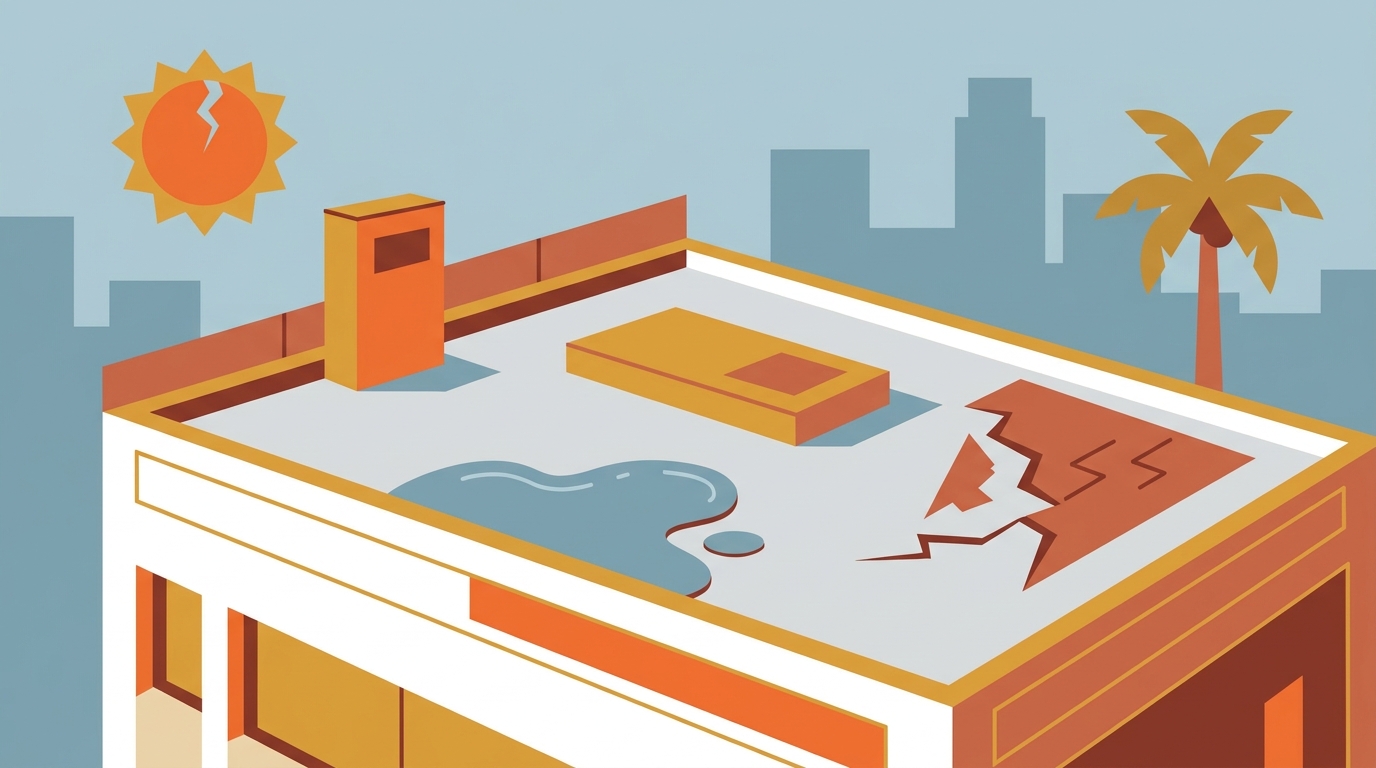
Most commercial roofs in the Tampa market are low-slope systems — TPO, modified bitumen, EPDM, or built-up roofing over insulation and a metal or concrete deck. These assemblies hide water well. A breach in the membrane can let moisture spread laterally between layers before it ever reaches a ceiling.
Three local factors make that worse:
- Heat and UV load. Tampa summers cook membranes and accelerate seam fatigue, especially on south- and west-facing parapets.
- Wind-driven rain and hurricane uplift. Florida Building Code wind requirements exist for a reason. Fasteners loosen, flashings lift, and water finds the gaps.
- Daily thermal cycling. Afternoon thunderstorms drop roof temperatures 30–40°F in minutes, stressing every seam and termination on the assembly.
The result: leaks where you see the drip are almost never directly above the actual breach. Effective commercial leak repair starts with finding the real entry point, not chasing the symptom.
Commercial Roof Leak Detection Methods That Actually Work
There's no single best method. Each technology answers a different question, and a thorough inspection often combines two or three.
1. Infrared Roof Inspection
An infrared roof inspection uses thermal imaging to find wet insulation. After sundown, dry roof areas release stored heat quickly while saturated areas hold heat longer and glow brighter on a thermal camera. The result is a clear map of where moisture has infiltrated the assembly.
Infrared is ideal for:
- Large warehouse and industrial roofs where visual inspection is impractical
- Pre-purchase or pre-warranty assessments on properties in Brandon, Carrollwood, or the Westshore corridor
- Confirming whether a roof needs full replacement or a targeted repair
Limitations matter, too. Infrared works best on sunny days followed by clear evenings — not always easy to schedule during Tampa's summer storm pattern. Ballasted roofs and certain insulation types can also mask thermal signatures.
2. Electronic Leak Detection (Low-Voltage and High-Voltage)
Electronic leak detection sends a current across the membrane. Because water conducts and an intact membrane does not, the system pinpoints breaches with remarkable accuracy — often within inches.
Low-voltage testing works on roofs with a conductive deck or a wetted surface. High-voltage "holiday" testing is used on exposed membranes and finds pinholes that no visual inspection would catch. For roofs with vegetation, pavers, or overburden — increasingly common on newer Tampa builds near downtown and Channelside — electronic detection is often the only practical option.
3. Roof Moisture Detection with Capacitance and Nuclear Meters
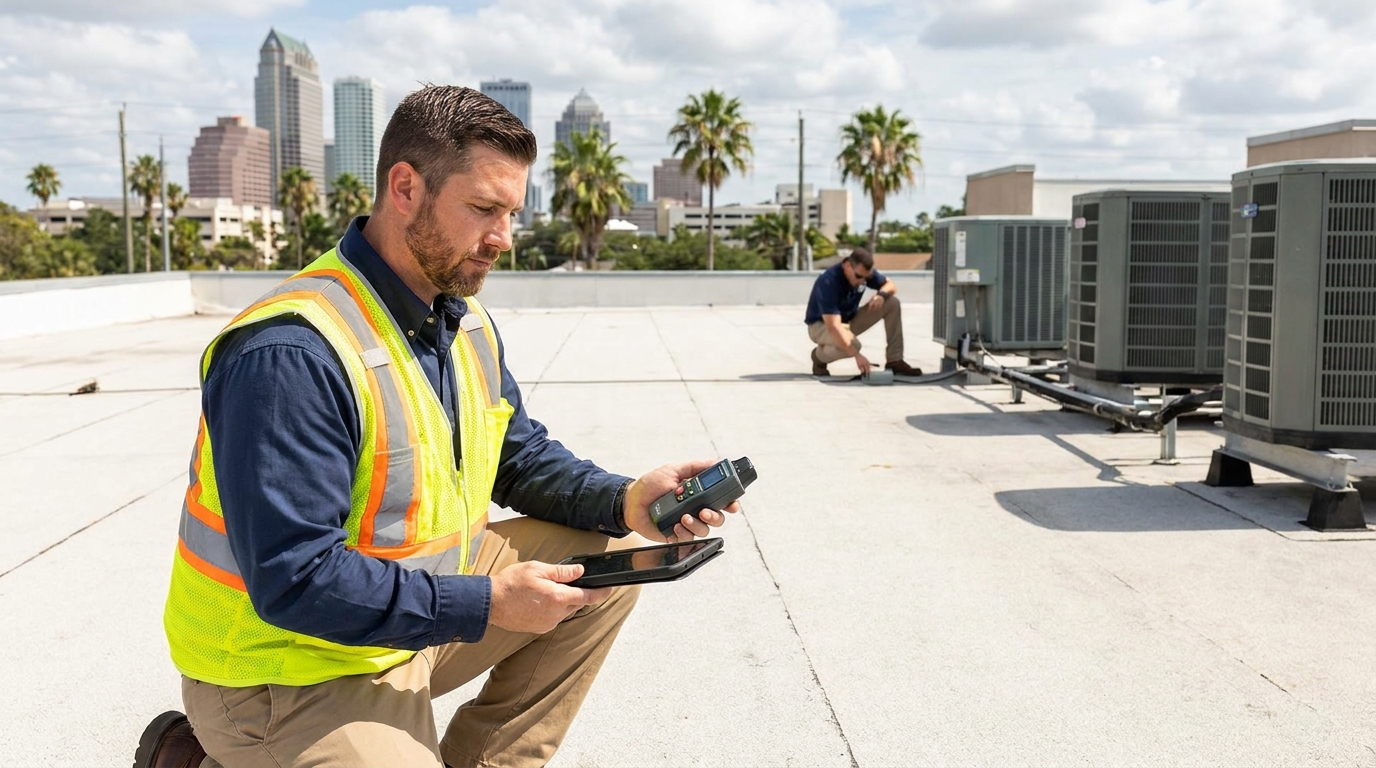
Capacitance meters read moisture content just below the surface and are excellent for spot-checking suspected areas. Nuclear hydrogen-detection meters scan deeper into the assembly and are typically used on a grid pattern to map saturation across an entire roof. Both produce documentation a property manager can hand to ownership, an insurance adjuster, or a buyer.
For a multi-tenant property where tenant disruption is a concern, roof moisture detection performed from above — without opening ceilings — is often the least invasive way to scope a problem.
4. Visual and Core-Sample Inspection
None of the above replaces a trained set of eyes on the roof. Experienced inspectors look at seams, terminations, pitch pans, drains, scuppers, HVAC curbs, and penetrations — the places where Tampa roofs almost always fail first. When non-destructive methods flag a suspect area, a small core sample confirms exactly what's wet and how deep the damage runs.
Matching the Detection Method to the Problem
A practical way to think about it:
- Active interior leak, unknown source: Start with visual inspection of penetrations and drains, then infrared after dark to map saturation.
- Roof under warranty, planning a sale or refinance: Infrared survey plus moisture meter grid for documentation.
- Vegetated or paver-covered roof: Electronic leak detection.
- Post-storm assessment after a named system has moved through the Bay area: Visual inspection first for obvious uplift and debris damage, followed by moisture scanning to catch hidden saturation before it rots the deck.
Commercial Leak Repair Methods, From Targeted to Full Restoration
Once the breach and the extent of wet insulation are known, repair options scale with the damage.
Targeted Membrane Repair
For isolated punctures, seam separations, or flashing failures, a properly prepped patch using compatible membrane and primer restores integrity. The key word is compatible — TPO patches don't belong on EPDM, and a mismatched repair voids most manufacturer warranties.
Wet Insulation Replacement
Saturated insulation never dries in place under a Tampa roof. It has to come out. Crews cut back the membrane, remove the wet board down to the deck, install matching-thickness replacement insulation, and weld in a new membrane section. Skip this step and the next leak is already scheduled.
Roof Coatings and Restoration Systems
For aging but structurally sound roofs, a fluid-applied silicone or acrylic coating can extend service life 10–15 years and often qualifies as a maintenance expense rather than a capital project. Coatings are not a fix for active leaks or wet insulation — they're what you apply after the underlying problems are resolved.
Full Re-Cover or Tear-Off
When moisture mapping shows widespread saturation, partial repairs become throwing money at a roof that's already past its useful life. A re-cover (new system installed over the existing one, where code allows) or a full tear-off and replacement is the honest answer. In Hillsborough County, permits and Florida Building Code wind compliance apply, and an experienced contractor will handle that paperwork as part of the project.
What to Expect From a Professional Inspection
A credible commercial roof inspection in Tampa should include:
- A walk of the entire roof with photo documentation of every penetration, seam, and termination
- Non-destructive moisture scanning appropriate to the assembly (infrared, capacitance, or electronic)
- A written report with marked-up roof plan showing wet areas, damage, and recommended repairs
- Repair scope with line-item pricing — not a single lump sum
- Warranty implications clearly stated, especially for roofs still under manufacturer coverage
If you're getting a one-page quote with no documentation, you're not getting an inspection. You're getting a guess.
Frequently Asked Questions
How often should a commercial roof be inspected in Tampa?
Twice a year is the standard recommendation — once before hurricane season in late spring, and once after, typically in late fall. Properties with heavy rooftop equipment or recent storm exposure benefit from more frequent checks.
Can infrared inspections be done on any commercial roof?
Most low-slope membrane and built-up roofs are good candidates. Ballasted systems, certain lightweight insulation types, and roofs that stay shaded can produce unreliable thermal data, in which case capacitance or electronic methods are better.
Will a leak repair void my roof warranty?
It can, if the repair isn't performed by a contractor approved by the membrane manufacturer or uses non-compatible materials. Always confirm warranty status before any work begins.
How quickly should an active leak be addressed?
Within days, not weeks. Wet insulation loses R-value immediately, and a saturated deck can develop structural issues within a single rainy season on the Gulf Coast.
Working With a Local Commercial Roofer
Commercial roof problems get solved faster when the contractor knows the building stock, the code environment, and the weather pattern. SCM Roofing, LLC works on commercial and residential roofs across the Tampa Bay area and holds GAF Master Elite certification — a credential one recent reviewer specifically called out as a reason they chose the company over lower-priced bidders. The firm's 4.9★ rating across more than 230 Google reviews reflects a pattern customers describe as straightforward communication and clean execution.
Property managers and owners in Tampa who want a commercial roof scoped, leak-tested, or repaired professionally can reach SCM Roofing, LLC at https://scmroofingfl.com for an inspection and estimate. Whether the answer is a targeted patch, a moisture survey, or a full restoration plan, the right starting point is knowing exactly what your roof is doing — before the next storm tells you the hard way.
"