If you own or manage a commercial building in Tampa, your roof is doing a harder job than almost any other component on the property. Between Gulf Coast humidity, afternoon thunderstorms from June through September, salt air rolling in from the bay, and the annual stretch of hurricane season, a flat or low-slope commercial roof in this market ages faster than the manufacturer's brochure suggests. The good news: most serious failures announce themselves long before the ceiling tiles come down. You just have to know what to look for.
This is a practical checklist of commercial roof warning signs Tampa property owners should be acting on, not filing away. If you see two or three of these on your building, it is time for a professional inspection before the next storm cell rolls across the bay.
Why Tampa Commercial Roofs Fail Faster Than the National Average
Before the checklist, a bit of context. Commercial roofs in Tampa face conditions that simply do not exist in most of the country: sustained UV exposure year-round, frequent wind-driven rain, and the structural stress of hurricane and tropical storm pressure cycles. Florida Building Code wind-load requirements for Hillsborough County are among the strictest in the state for good reason — buildings here regularly take Category 1 to 3 wind events. Membranes, fasteners, and flashings that would last 25 years in Ohio routinely need attention at 12 to 15 years here.
That accelerated timeline is why proactive commercial roof inspection signs matter so much. Catching a small membrane separation in the Westshore business district before September is a maintenance call. Catching it after a tropical system is an insurance claim and a tenant displacement.
The Commercial Roof Warning Signs Checklist
1. Visible Ponding Water 48 Hours After Rain
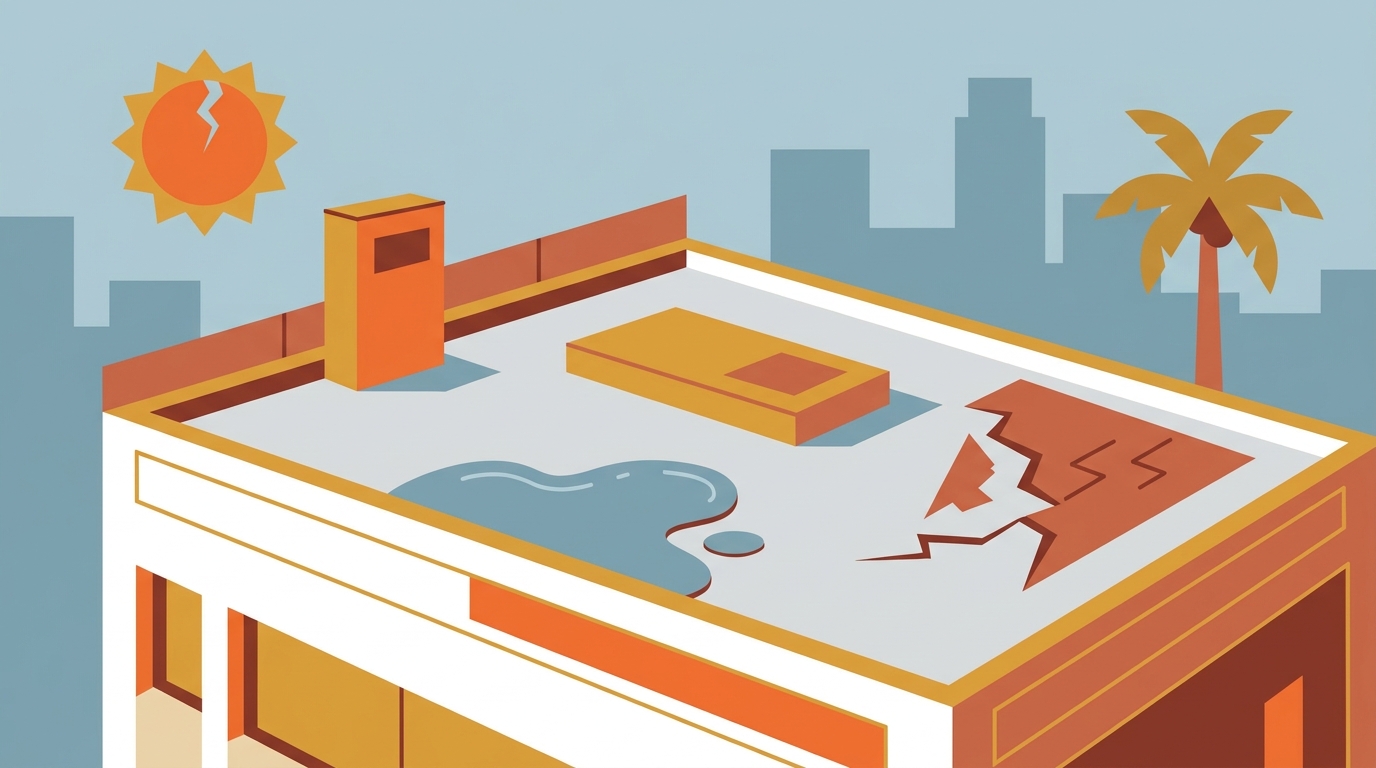
On a properly draining low-slope roof, standing water should dissipate within about two days. If you walk your roof after a Tampa afternoon storm and find puddles still sitting there mid-week, you have a drainage problem. Ponding accelerates membrane breakdown, voids most manufacturer warranties, and adds dead load the structure was not designed to carry long-term.
2. Bubbling, Blistering, or Membrane Separation
TPO, EPDM, and modified bitumen systems all show stress through the membrane surface. Blisters mean trapped moisture or air. Seam separations mean the adhesive or weld has failed. Either one is an open door for the next rainstorm. Run your eyes along every seam and penetration — HVAC curbs, vent stacks, drains.
3. Interior Staining, Discoloration, or Drips
By the time a tenant calls about a wet ceiling tile, water has usually been moving through the roof assembly for weeks or months. The visible drip is rarely directly under the actual breach — water travels along decking and joists before it finds gravity. Document every stain with photos and dates. Patterns matter to inspectors and insurance adjusters.
4. Granule Loss on Modified Bitumen or Cap Sheets
If you see piles of granules at downspout outlets or on the ground around the building, your roof is shedding its UV protection. In Tampa's sun, an exposed asphalt layer degrades quickly — often within a single summer.
5. Damaged, Lifted, or Missing Flashing
Flashing failures cause more commercial roof leaks than membrane failures. Check parapet walls, equipment curbs, scuppers, and roof-to-wall transitions. Lifted metal counterflashing after a wind event is a five-alarm signal — not something to add to next quarter's budget.
6. Sagging or Soft Spots Underfoot
Walking the roof and feeling spongy areas means the insulation or decking below has absorbed water. This is structural, not cosmetic. Saturated insulation also tanks your building's energy performance, which you will feel in summer cooling bills across South Tampa and Ybor properties running rooftop HVAC.
7. Rusted or Corroded Metal Components
Salt air from Tampa Bay reaches well inland. Rust on fasteners, edge metal, drains, or rooftop equipment housings is not just aesthetic — corroded fasteners lose pull-out strength, which is exactly what holds your roof down in a hurricane.
8. Clogged or Slow-Draining Scuppers and Drains
Tampa's rainy season can drop two to four inches of rain in an hour. If your primary drains are partially blocked by debris, palm fronds, or biological growth, water backs up fast. Overflow scuppers are a backup, not a primary system.
9. Energy Bills Climbing Without Explanation
Wet insulation has a fraction of its rated R-value. If your monthly utility costs have crept up year over year and the HVAC system checks out, the roof assembly is a likely culprit.
10. Your Roof Is Past 15 Years Old and Has Never Been Inspected
This one is simple. If you cannot remember the last professional inspection — or if you inherited the building and have no records — you are flying blind. Tampa commercial roofs need documented inspections at least annually, ideally before hurricane season starts in June and again after it ends in November.
When to Replace a Commercial Roof Versus Repair It
Not every warning sign means full replacement. The decision usually comes down to four factors: age of the system, percentage of the roof showing damage, condition of the insulation below the membrane, and whether the existing warranty is still active.
- Repair makes sense when: damage is localized (under roughly 25% of the roof area), the membrane is under 15 years old, and insulation moisture scans come back dry.
- Replacement makes sense when: the roof is at or past its service life, multiple systems (membrane, flashing, insulation) are failing simultaneously, or repeated repairs are no longer holding.
- Re-cover (overlay) may be an option when: the existing deck is structurally sound, code allows it (Florida generally permits only one overlay), and moisture surveys confirm the substrate is dry.
A qualified contractor should walk you through all three options with infrared moisture scan results and core samples — not just hand you a replacement quote.
Frequently Asked Questions
How often should a commercial roof be inspected in Tampa?
Twice a year at minimum — once before hurricane season begins and once after it ends — plus an additional inspection after any named storm or significant wind event. Annual-only inspection schedules that work in milder climates leave Tampa buildings exposed.
Does insurance cover commercial roof damage from hurricanes?
Most Florida commercial policies cover sudden storm damage but exclude damage attributed to wear, age, or deferred maintenance. This is exactly why documented inspections matter — they establish the roof's pre-storm condition, which is often the deciding factor in a claim.
Do I need a permit to replace a commercial roof in Tampa?
Yes. Roof replacement on commercial properties in the City of Tampa and unincorporated Hillsborough County requires a permit, and the work must comply with current Florida Building Code wind-uplift and attachment requirements. Any contractor telling you otherwise should be a hard pass.
What's the average lifespan of a commercial roof on the Gulf Coast?
It depends on the system: TPO and PVC typically deliver 15 to 20 years here, modified bitumen 12 to 18 years, and metal systems 25 years or more with proper coating maintenance. Tampa's UV and storm exposure tends to pull all of these toward the lower end of their ranges.
Closing Thoughts
Commercial roofs rarely fail without warning. They fail after months — sometimes years — of small signals that got rationalized away as cosmetic or non-urgent. The property owners who avoid catastrophic losses in Tampa are the ones who treat the checklist above as a working document, not a someday project.
If you have spotted two or more of these warning signs on your building and want a professional assessment, SCM Roofing, LLC works with commercial property owners throughout the Tampa area and can be reached at https://scmroofingfl.com for an inspection or estimate. The team holds GAF Master Elite certification — a credential a recent client specifically pointed to as a reason they chose the company over other bids — and the firm's 4.9-star Google rating across more than 230 reviews reflects the kind of communication and follow-through commercial property owners tend to value when a roof problem actually shows up.
"